

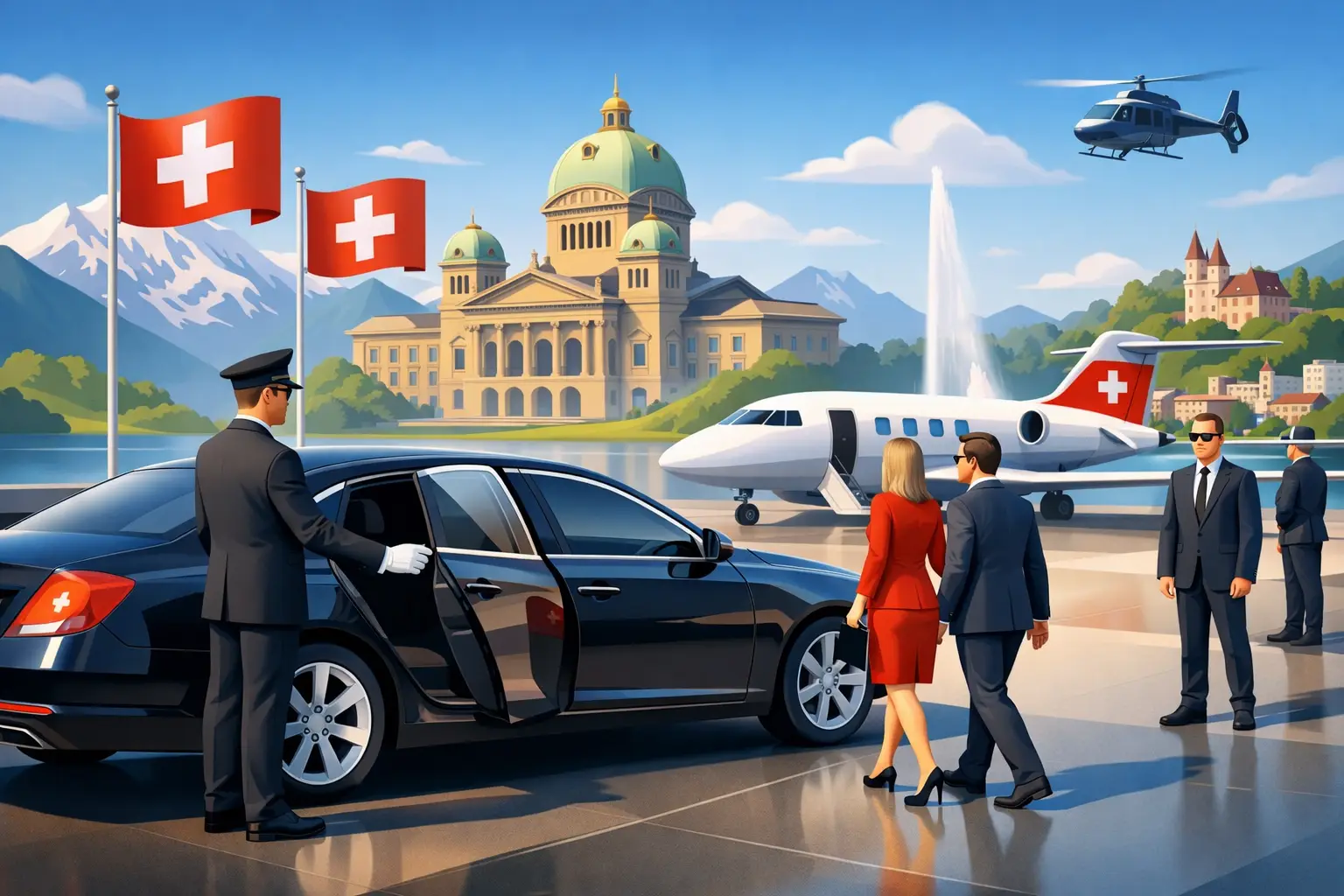
A diplomatic itinerary rarely fails because of the obvious. More often, the pressure builds in the margins – a delayed airport pickup, a poorly briefed driver, an avoidable route issue, or a vehicle that does not match the level of the occasion. When the schedule involves embassies, consulates, official meetings, hotels, and security-sensitive movements, choosing the right chauffeur for diplomatic visits becomes part of the protocol itself.
In Switzerland, those expectations are especially high. Timing is tight, standards are visible, and guests often include senior officials, corporate representatives, royal households, or international delegations who expect calm execution without reminders. The transport provider is not just moving passengers from one point to another. They are protecting the tone of the visit.
What a chauffeur for diplomatic visits actually needs to deliver
Diplomatic transport has little in common with standard executive travel beyond the vehicle category. The real requirement is controlled, dependable movement under conditions where discretion matters as much as punctuality.
A qualified chauffeur for diplomatic visits must understand protocol, but also know how to work around it when real-world conditions change. Flights shift. Convoys adjust. Meetings run over. Security teams revise entrances at short notice. The chauffeur has to remain composed, informed, and responsive without adding noise to the process.
That balance is what separates premium service from simple transportation. A diplomatic passenger does not want explanations from the driver unless necessary. They want the vehicle ready, the route considered, the timing checked, and the transition from aircraft or hotel lobby to destination handled with confidence.
Why diplomacy demands more than luxury
A premium sedan or van sets the standard, but luxury alone is not the deciding factor. In diplomatic settings, representation and restraint matter equally.
The vehicle must arrive in immaculate condition and suit the guest profile, yet it should never feel performative. The same applies to the chauffeur. Professional appearance is expected, but so is the ability to remain unobtrusive. A chauffeur who talks too much, improvises too freely, or treats a state-level movement like a hospitality transfer creates friction immediately.
There is also a practical side. Diplomatic visits often include multiple stakeholders – assistants, security personnel, protocol teams, hotel concierges, event planners, and office staff. Transportation has to fit into that structure cleanly. That means accurate passenger manifests, clear pickup sequencing, disciplined waiting procedures, and fast communication through the right contact person.
The operational details that matter most
For diplomatic clients, reliability is built before the car arrives. The quality of preparation usually determines how smooth the day feels.
Advance planning and route control
A serious service reviews the agenda in detail, not just the start and end point. Airport handling, alternate routes, waiting windows, access restrictions, vehicle positioning, and likely congestion points all need to be considered ahead of time. In cities such as Geneva, Zurich, or Bern, that planning can make the difference between a calm arrival and a rushed one.
The strongest providers also work with contingency in mind. If a meeting ends early, the chauffeur should already be within reach. If access changes due to security or an event perimeter, there should be a second plan in place. Diplomatic transportation is rarely difficult because of mileage. It becomes demanding because every transition has consequences.
Discretion in every interaction
Discretion is often described as a service feature, but in diplomatic work it is closer to a baseline requirement. Passenger identity, destinations, timings, and habits should be handled carefully, whether the client is a government representative, a royal guest, or a senior corporate figure traveling alongside officials.
That discretion extends beyond conversation. It includes how the chauffeur manages luggage, where the vehicle is positioned, how long it waits in view, and how information is shared internally. A polished service knows that discretion is visible in behavior, not just promised in words.
Multilingual communication and cultural awareness
Diplomatic travel is international by nature. Chauffeurs may need to coordinate with guests, assistants, or organizers in English, German, or French within the same assignment. Clear, respectful communication reduces risk and keeps movements efficient.
Cultural awareness matters as well. Some guests prefer direct communication, others expect formal distance. Some delegations move quickly, while others work through aides. There is no single rule that fits every visit. The chauffeur must read the situation and support the schedule without becoming part of it.
When the itinerary includes multiple stops
Single transfers are straightforward. Diplomatic visits are usually not.
A day may begin with an airport arrival, continue to a hotel check-in, move into bilateral meetings, then shift to a lunch venue, official residence, conference site, and evening function. In that setting, the service has to think beyond driving. Vehicle readiness, waiting logic, timing adjustments, and passenger comfort all become part of one continuous assignment.
This is where experienced chauffeur teams bring real value. They understand that the guest should never have to ask whether the car is in place, whether the next leg has been updated, or whether the driver knows the revised entrance. The answer should already be yes.
For delegations, the complexity increases again. You may need coordinated sedans, executive vans, or support vehicles that move in sequence while preserving flexibility. Too much rigidity causes delay. Too little structure creates confusion. Good diplomatic transport sits precisely between those extremes.
Chauffeur for diplomatic visits and airport protocol
Airport movements deserve special attention because they set the tone for the entire visit. An arrival after a long-haul flight, often with limited tolerance for delay, requires exact timing and a professional handover.
For international guests arriving in Switzerland, that may involve coordination with assistants, hotel representatives, private terminals, or security contacts. The chauffeur should know where to be, whom to contact, how to identify the guest appropriately, and how to move onward without unnecessary visibility or waiting.
Departures matter just as much. A diplomatic guest leaving for another capital or returning after a summit expects the final transfer to be as controlled as the first. A rushed departure undermines an otherwise excellent schedule.
What organizers should look for in a diplomatic chauffeur service
The best way to assess a provider is not by promises alone, but by how they think about the assignment. A credible service asks the right questions early. Who is traveling? What level of protocol applies? Is there a lead contact? Are there security considerations? Will the schedule remain flexible? Are multiple vehicles required? Is there a preferred vehicle class? Those questions show operational maturity.
It also helps to look for proven experience in high-expectation environments. Diplomatic visits, major summits, luxury hotels, and executive roadshows all require similar discipline: punctuality, discretion, polished presentation, and calm response under pressure. A chauffeur service that performs well in those environments is usually better prepared for official visits than a general transport operator.
Berner Limousine, for example, works in precisely these kinds of settings across Switzerland, where diplomatic schedules, premium hospitality, and international business travel often overlap. That experience matters because official movements rarely allow a learning curve.
The trade-off between visibility and security
Not every diplomatic movement calls for the same style of transport. Some visits require understated vehicles and low-profile handling. Others benefit from a more formal presentation that matches the guest’s rank and the host’s expectations. There is no universal formula.
That is why flexibility matters. A provider should be able to adapt the vehicle type, arrival style, staging point, and communication flow to the nature of the visit. In some cases, the most professional choice is visible formality. In others, it is quiet efficiency with as little attention as possible. The right answer depends on the guest, the venue, and the purpose of the visit.
Why consistency matters more than flair
Diplomatic clients do not need theatrics. They need consistency. The car should be clean every time. The chauffeur should be briefed every time. The pickup should be calm every time. That repetition builds trust, especially for embassies, corporate offices, hotels, and organizers who arrange high-level transportation regularly.
This is also why personal service remains valuable. When a provider knows the client’s preferences, recurring routes, and communication style, the process becomes faster and more reliable. That familiarity is useful in any premium service, but in diplomatic work it can prevent small mistakes that would otherwise become highly visible.
A chauffeur for diplomatic visits is ultimately there to remove uncertainty. Not with grand gestures, but with timing, judgment, and disciplined execution. When transport is handled at that level, the visit feels composed from the first arrival to the final departure – exactly as it should.
When the schedule is sensitive and the guest profile demands more than a standard transfer, the right transport partner does more than drive. They help the entire visit stay on its intended course.