
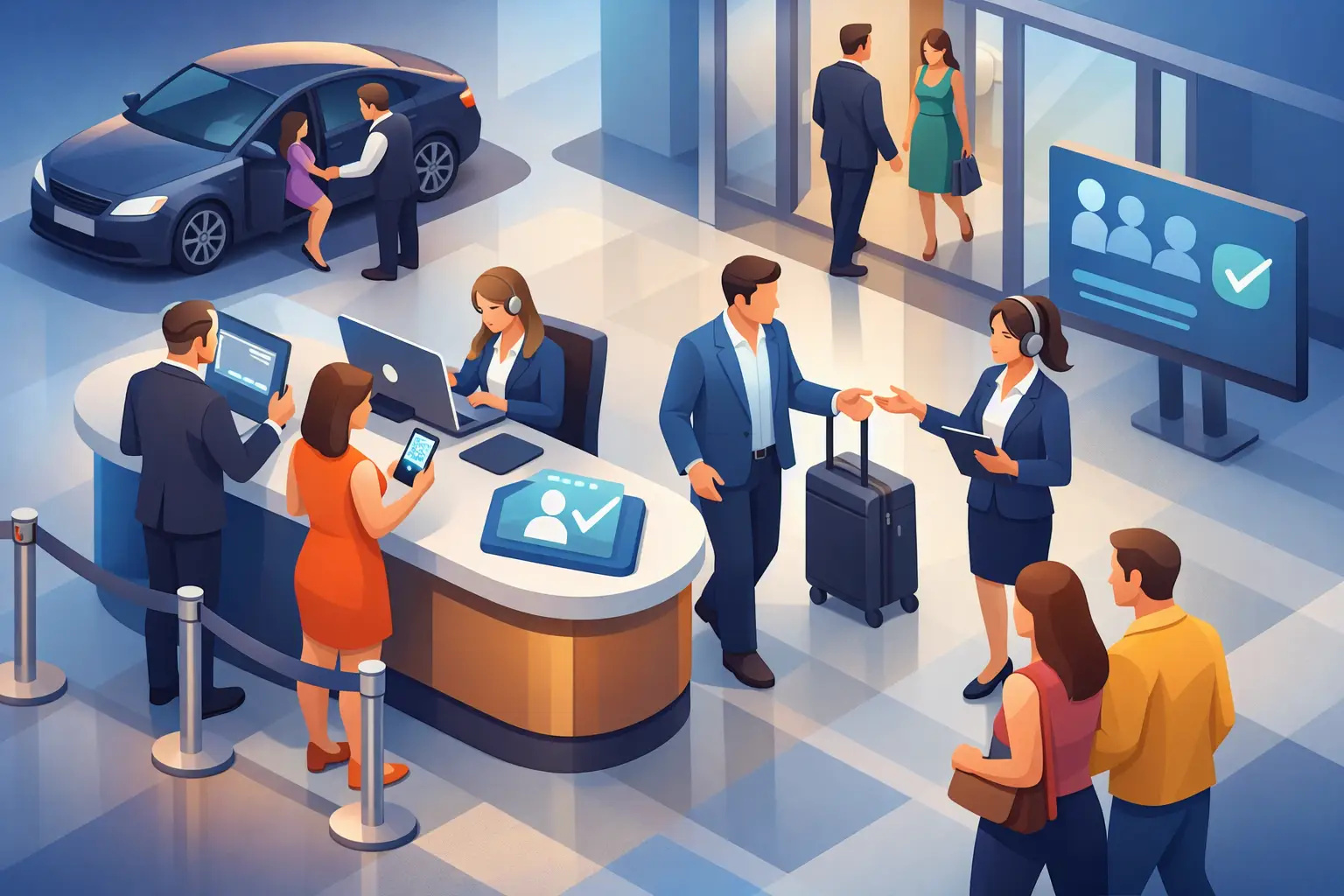
The first real test of an event rarely happens inside the venue. It happens at the curb, at the airport pickup point, at the hotel entrance, or in the final ten minutes before a guest steps into the room. Event guest arrival management is where timing, discretion, and first impressions either hold together or start to slip.
For private hosts, executive assistants, hotels, and event planners, this stage is often underestimated because it looks simple on paper. A guest lands, a vehicle arrives, and the schedule continues. In practice, arrivals involve shifting flight times, baggage delays, last-minute route changes, security protocols, multiple pickup points, and very different expectations depending on whether the guest is a conference speaker, a wedding party, or a high-profile principal.
Why event guest arrival management matters more than most plans admit
Guests notice arrival quality immediately. They may never comment on a well-run transfer, but they always remember confusion. Waiting without updates, searching for the correct driver, sitting in the wrong vehicle queue, or entering through a crowded public area can change the mood before the event has even begun.
For corporate and diplomatic settings, the stakes are higher. Arrival management affects schedule integrity, privacy, and reputation. If a keynote speaker arrives late because ground handling was treated as an afterthought, the issue is not just transport. It becomes an operational failure visible to everyone else.
There is also a difference between moving people and receiving them properly. A standard transfer may be enough for low-complexity events. But when guest profiles vary, timing matters to the minute, or the event carries public visibility, the arrival phase needs active coordination rather than passive dispatching.
What strong event guest arrival management includes
The most effective approach starts well before the day itself. Vehicle planning is only one part of the job. A proper arrival plan connects guest data, timing, venue access, communication protocols, and contingency handling into one clear operational picture.
At minimum, organizers need to know who is arriving, when they are arriving, how flexible those times really are, what level of service each guest requires, and where the handover from travel to venue responsibility takes place. This sounds basic, yet many event issues begin because one of those details is vague.
A senior executive arriving from an international flight does not need the same handling as a local attendee coming from a nearby hotel. A wedding couple needs calm pacing and polished presentation. A VIP guest may require a discreet route, reduced waiting time, and direct communication with one contact person only. Treating every arrival the same creates friction where precision is needed.
Guest segmentation prevents operational mistakes
One of the most useful disciplines in event guest arrival management is segmenting guests by function, not by status alone. Organizers often focus only on who is important. The better question is what each person needs in order to arrive smoothly.
A speaker needs punctuality and enough buffer to prepare. A board member may need privacy and schedule protection. International guests may need reassurance, multilingual communication, and clear local guidance. Wedding guests may need grouped movement and simple instructions. Once arrivals are segmented this way, vehicle assignments, meeting points, communication style, and staffing become much easier to design.
Arrival windows matter more than exact times
Many planning documents rely on exact timestamps that look reassuring but do not reflect reality. Flights land early or late. Baggage reclaim varies. City traffic changes by the hour. Venue access may tighten unexpectedly.
That is why experienced planners work with arrival windows rather than rigid assumptions. A guest expected at 3:10 p.m. may actually need transport readiness from 2:55 to 3:35. Building this flexibility into dispatch and reception planning reduces stress without sacrificing precision.
Airport, hotel, and venue arrivals require different handling
Not all arrivals should be managed the same way. The location changes the risks.
At airports, the main variables are flight timing, baggage collection, customs, and meeting point clarity. Guests may be tired, under time pressure, or unfamiliar with the airport layout. The handoff needs to be calm, visible, and immediate.
At hotels, the challenge is often coordination. A guest may still be checking out, meeting colleagues in the lobby, or running behind schedule. Here, communication matters as much as timing. Chauffeurs and coordinators need to know when to wait discreetly, when to make contact, and when to alert the organizer.
At venues, congestion becomes the issue. Multiple vehicles arriving at once can create delays, security problems, or an impression of disorder. Staggered arrivals, designated drop-off points, and a clear chain of command prevent the entrance from becoming a bottleneck.
The role of the chauffeur in guest arrival management
A premium chauffeur service is not simply a transport provider in this context. It becomes part of the event operation.
That distinction matters because guests do not separate the ride from the event experience. If the chauffeur is informed, punctual, discreet, and aligned with the organizer, the arrival feels controlled. If the driver has incomplete details, limited situational awareness, or no direct update channel, even a luxury vehicle cannot compensate.
For high-expectation events, chauffeurs need more than an address and a name. They need the correct pronunciation of the guest name, awareness of schedule sensitivity, understanding of the arrival protocol, and a clear contact path if conditions change. They also need the judgment to adapt without creating visible tension.
This is especially relevant in Switzerland, where event logistics often involve airport transfers, city hotels, mountain destinations, and venues with restricted access. A polished arrival in Zurich or Geneva can require very different timing logic than a transfer into Gstaad, Interlaken, or a private venue with narrow access and weather considerations.
Communication is where good plans hold or fail
Most arrival disruptions are manageable if communication is structured early. They become serious only when updates are delayed, fragmented, or sent to the wrong person.
The best system keeps communication tight. Each guest should know only what they need: who is meeting them, where, and what to do if anything changes. The chauffeur should have one reliable operational contact. The organizer should receive exceptions, not a flood of minor updates.
Too many messages create as much risk as too few. If the assistant, hotel concierge, venue manager, and transport desk are all issuing separate instructions, confusion is almost guaranteed. One lead coordinator with clear escalation rules usually delivers a better result than a wider but looser chain.
VIPs and public figures need less visibility, not more attention
A common mistake in high-profile arrivals is overmanaging the moment in a way that draws unnecessary attention. Public greetings, visible name boards in sensitive settings, or crowded handoff points can undermine privacy.
Discreet event guest arrival management means reducing exposure while maintaining control. That may involve pre-agreed meeting points, direct vehicle access, alternative entrances, or staggered scheduling to avoid public overlap. For some guests, the smoothest arrival is the one almost nobody notices.
Where planners should expect trade-offs
There is no single perfect setup for every event. Efficiency, visibility, guest experience, and security do not always point in the same direction.
A centralized arrival zone is efficient for group control, but it may feel impersonal for VIPs. Separate transfers improve privacy, but they increase fleet complexity and coordination pressure. Tight scheduling protects the program, but if there is no buffer, one delayed flight can affect the whole sequence.
This is why the right model depends on event type. A conference with dozens of executive arrivals needs repeatable systems and disciplined timing. A wedding needs grace, presentation, and emotional calm. A diplomatic or board-level event may place privacy above speed. Good planners accept these trade-offs early instead of forcing one arrival model onto every occasion.
Building a calmer arrival experience
The most reliable arrival operations tend to look understated from the outside. Guests feel expected. Vehicles appear on time. The entrance remains composed. Problems are handled quietly.
That outcome usually comes from a few disciplined choices: accurate manifests, realistic timing windows, segment-based planning, one operational lead, and chauffeurs who understand that service includes judgment. For premium events, that final point matters more than many planners expect. Professional driving is essential, but situational awareness is what protects the experience.
A service such as Berner Limousine is often brought in for exactly this reason – not simply to provide executive vehicles, but to support arrivals where timing, discretion, multilingual communication, and representational standards all matter at once.
If you are planning an event with demanding guests, start with the arrival rather than leaving it to the end of the checklist. When the first ten minutes are handled properly, everything that follows has a better chance to feel measured, confident, and fully under control.