

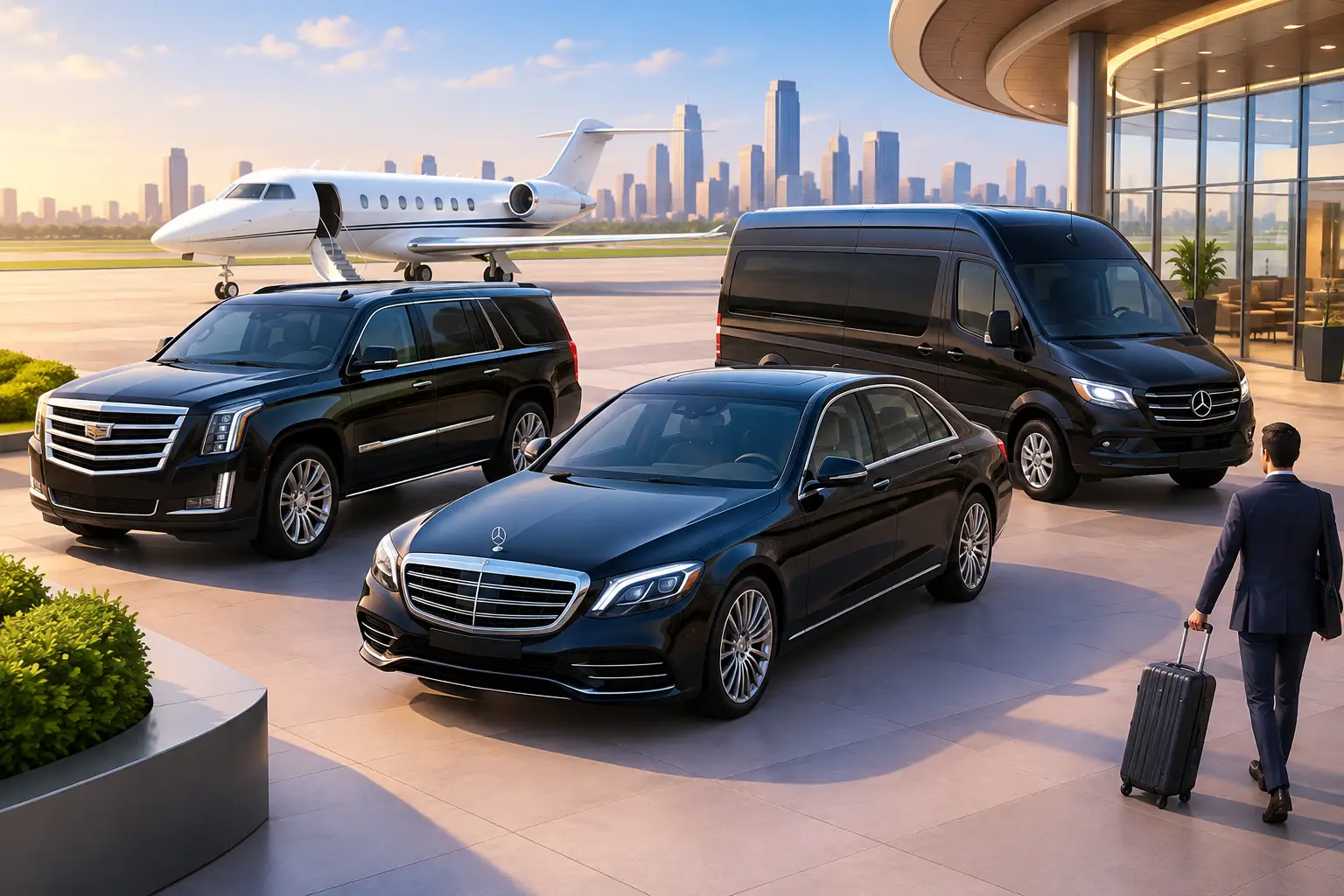
A vehicle arrives at the airport before a word is exchanged, and it has already made an impression. For board members, international guests, and clients on a tightly managed schedule, the best vehicles for executive travel do more than provide a comfortable seat. They protect time, support privacy, reflect the standard of the host, and make a demanding itinerary feel controlled.
The right choice is rarely simply the largest or most expensive vehicle. A solo executive traveling from Zurich Airport to a city meeting has different requirements from a delegation moving between Bern, Interlaken, and a private hotel. Passenger count, luggage, road conditions, meeting purpose, and the desired level of discretion all matter.
What Executive Travel Demands From a Vehicle
Executive transportation is judged in the details. Rear-seat comfort matters, but so do quiet cabin acoustics, climate control, easy entry, clean presentation, and luggage capacity that does not compromise passenger space. A business traveler should be able to make calls, review documents, or pause between appointments without feeling like they are in transit.
Reliability is equally central. In Switzerland, travel can include airport access roads, city centers, mountain routes, hotel driveways, and long intercity distances on the same day. The ideal vehicle must remain composed and comfortable across each setting. It should also suit the occasion: understated for a confidential corporate transfer, more spacious for a family office delegation, or highly presentable for a diplomatic arrival.
A professional chauffeur completes the experience. Even an exceptional vehicle cannot compensate for uncertain routing, poor timing, or a lack of situational awareness. For sensitive and high-level travel, the vehicle and chauffeur should operate as one considered service.
Best Vehicles for Executive Travel by Situation
Luxury executive sedans for individual travelers
A premium executive sedan is the natural choice for one or two passengers traveling with light to moderate luggage. It offers a refined, private environment without appearing excessive. This makes it particularly suitable for airport transfers, investor meetings, dinners, roadshows, and point-to-point city transportation.
Mercedes-Benz executive sedans are widely valued in this role because they balance rear-seat comfort with a discreet exterior presence. The cabin allows a passenger to work or rest in peace, while the vehicle remains easy to manage at private residences, central business districts, and hotel entrances.
The trade-off is capacity. A sedan is not the best option when multiple passengers each carry large suitcases, ski equipment, presentation materials, or event supplies. Trying to fit an oversized itinerary into a sedan can quickly reduce the comfort that executive transportation is intended to provide.
Luxury SUVs for comfort, access, and luggage
A luxury SUV is a strong choice when a client needs additional luggage room, a higher seating position, or greater flexibility for varied routes. It can be particularly practical for arrivals with substantial baggage, winter travel, and journeys that involve rural or alpine destinations.
For an executive traveling alone or with a companion, an SUV offers generous space without moving into the scale of a van. It also provides a confident arrival for leisure-oriented business travel, such as a transfer to Gstaad, Grindelwald, or a private residence outside a city center.
That said, the SUV format is not always the most discreet option. For a formal board transfer or a client who values a classic business profile, a sedan may still make the better impression. The choice depends on whether the journey prioritizes understated elegance or flexible carrying capacity.
Luxury vans for delegations and VIP families
For three to six passengers, a luxury van is often the most intelligent executive choice. It avoids splitting a group into multiple cars, gives passengers enough room to talk comfortably, and handles luggage with ease. This is especially valuable for corporate teams, visiting executives, VIP families, wedding parties, and small event groups.
A premium Mercedes-Benz van can offer a surprisingly private and composed setting for longer transfers. The upright cabin makes entry and exit easier, an advantage for older guests or passengers in formal attire. It also allows a host and guests to remain together from arrival through to the destination, which can be important when schedules or hospitality arrangements need to be coordinated en route.
The main consideration is the vehicle’s larger footprint. In a narrow historic center or at a compact urban entrance, a sedan may be more convenient. An experienced chauffeur plans for this in advance, selecting sensible pickup points and allowing for local access restrictions.
Minibuses for coordinated group movements
When the itinerary involves larger groups, a minibus is the appropriate solution. This may include conference guests, corporate delegations, production teams, wedding attendees, or hospitality groups traveling between an airport, hotel, venue, and dining reservation.
The priority at this level is organization. A well-appointed minibus keeps the group together, simplifies timing, and reduces the confusion that can result from several separate arrivals. It is often more efficient for congresses, events, and multi-stop programs where punctuality must be consistent across every guest.
Group transport requires careful planning rather than a last-minute vehicle decision. Exact passenger numbers, luggage volume, flight details, accessibility needs, and the route should be confirmed ahead of time. This is where a dedicated chauffeur service adds real operational value: the vehicle is only one part of a coordinated movement plan.
How to Choose the Right Executive Vehicle
Start with the passenger experience, not just the passenger count. Two people with carry-on luggage have very different needs from two people arriving after an international flight with several large cases. A four-person board team may prefer the privacy of two sedans, while a close-knit leadership group may work better in one luxury van.
Next, consider the purpose of the ride. For a confidential meeting, a quiet executive sedan creates a focused setting. For a hotel transfer with clients and luggage, an SUV or luxury van may be more appropriate. For a full day of appointments, rear-seat space and ease of entry become more significant than they might be on a short airport run.
It is also worth considering the itinerary beyond the first stop. A vehicle that works well for a downtown meeting may not be ideal for an evening transfer to a mountain resort or a final airport departure with additional bags. Providing the full schedule when booking allows the chauffeur team to recommend a vehicle based on the entire day, rather than one isolated journey.
Presentation Matters, but Discretion Matters More
Executive travel should feel polished, not theatrical. The best vehicle is one that aligns with the passenger’s profile and the nature of the engagement. A senior executive may prefer a classic sedan that attracts little attention. A guest delegation may need a luxury van that communicates generosity and foresight. A VIP family may value space, privacy, and attentive assistance above all else.
Vehicle presentation should always be immaculate: a clean exterior, a carefully maintained interior, and an environment free from unnecessary distractions. Yet the strongest sign of premium service is often restraint. The chauffeur knows when to assist, when to remain available in the background, and when a passenger needs complete privacy.
For international visitors, this discretion is particularly valuable. A multilingual chauffeur who understands local routes, hotel procedures, and airport processes can remove friction without making the service feel intrusive. That combination of quiet competence and considered hospitality is what turns transportation into executive travel.
Matching the Vehicle to the Chauffeur Service
The vehicle selection is only as good as the service supporting it. Confirmed pickup procedures, flight monitoring, clear communication, and a chauffeur who understands the expected standard are essential. For companies managing recurring guest travel, consistency matters even more. The same level of presentation and reliability should apply whether the journey is a short transfer in Bern or a multi-day itinerary across Switzerland.
Berner Limousine provides this kind of considered planning with premium Mercedes-Benz vehicles and professional chauffeurs for executive, VIP, and group travel. The goal is not to place every passenger in the same vehicle category. It is to assign the right vehicle to the journey, the guests, and the occasion.
A well-chosen executive vehicle gives passengers something increasingly rare in a full schedule: a calm, private interval in which the next meeting, arrival, or decision can receive their full attention.