

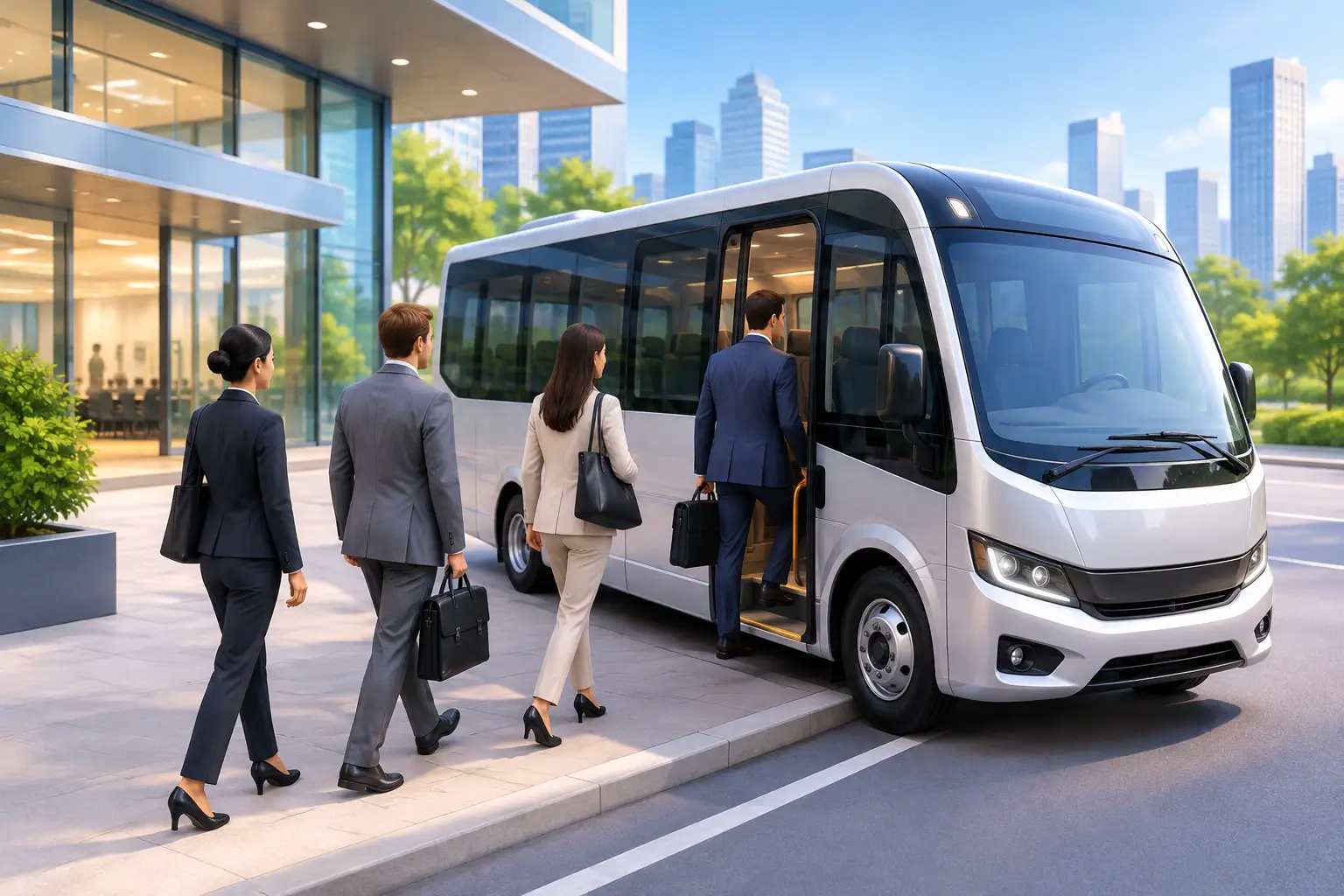
A late keynote speaker, a missed airport arrival, or a line of guests waiting outside a venue can change the tone of an event before the first presentation begins. A business events shuttle is not simply transportation between two points. It is a coordinated mobility plan that protects schedules, supports guest experience, and represents the standard of the host organization.
For conferences, board meetings, roadshows, client dinners, and VIP gatherings, transportation needs to work quietly in the background. Guests should know where to go, arrive composed, and leave with the same confidence. That requires more than available vehicles. It requires experienced chauffeurs, clear dispatching, and a team that understands how quickly event schedules can change.
What a Business Events Shuttle Must Deliver
Event transportation is judged by details that are often invisible when everything goes well. A chauffeur is waiting before the guest exits the terminal. A vehicle arrives at the correct entrance rather than the public drop-off point. A delegate who lands late is integrated into the schedule without disrupting the rest of the group.
For organizers, the essential value is control. A properly managed shuttle service creates reliable transfer windows between airports, hotels, venues, restaurants, and private locations. It gives guests one less decision to make and gives the event team a clear point of contact when plans shift.
The right arrangement depends on the event format. A small executive dinner may need individually timed chauffeur transfers and discreet waiting service. A large congress may require coordinated arrivals from several hotels, staggered departures, and dedicated vehicles for speakers or senior guests. Trying to handle both scenarios with the same approach can create unnecessary friction.
Timing Starts Before the First Pickup
An event schedule should never be built around ideal traffic conditions alone. Arrival times need to account for luggage collection, immigration for international guests, hotel check-in, venue access procedures, and the time it takes a group to board. In destinations with seasonal traffic, mountain routes, or major public events, additional planning becomes even more important.
The strongest plans use pickup windows rather than optimistic single-minute schedules. Guests receive clear instructions, while the chauffeur team works with live conditions and agreed contingencies. This protects the program when a flight delay, extended meeting, or weather change affects the day.
For airport transfers, flight monitoring is especially valuable. A chauffeur can adapt to a revised landing time and meet the guest at the appropriate point, rather than leaving the traveler to arrange transport after an already demanding journey. For international executives, that first interaction sets the service level for the entire visit.
The Right Vehicle Mix for the Occasion
A business event shuttle should match the profile of the guests as well as the number of passengers. Executive sedans provide a discreet, professional setting for individual leaders, speakers, and clients. Luxury vans are practical for small teams traveling together, particularly when luggage or presentation materials are involved. Larger guest movements may require a coordinated fleet with assigned vehicle groups and departure times.
Capacity matters, but it is not the only consideration. A vehicle that appears adequate on paper may become unsuitable when winter luggage, trade-show materials, or airport baggage are added. Accessibility requirements, security expectations, and the need for private conversations during the journey should also be considered early.
For VIPs, diplomats, and high-profile speakers, discretion is as important as comfort. The vehicle should provide a calm environment, and the chauffeur should understand that privacy means more than avoiding conversation. It includes measured communication, professional appearance, careful routing, and the ability to manage an arrival without drawing attention.
Coordination Is the Difference Between Transport and Service
At a well-managed event, the organizer should not need to call several drivers to locate guests or relay last-minute changes. One responsible coordination point should oversee the movement plan, chauffeur assignments, pickup instructions, and operational updates.
This is particularly relevant when guests arrive in waves. One group may be traveling from Zurich Airport, another from Bern, and a speaker may need to go directly from an airport to a venue in Interlaken or Gstaad. Each journey has different timing, luggage, and guest-service requirements. Central coordination keeps these movements connected to one event schedule.
A detailed run sheet is useful, but it should not become rigid. It should identify names, contact details, flight information where relevant, pickup locations, vehicle allocations, destination entrances, and special requirements. It should also establish who can authorize changes. That single point prevents confusion when an assistant modifies a pickup or a meeting ends earlier than expected.
Communication Guests Will Actually Use
Transportation instructions should be simple enough to read while someone is walking through an airport or leaving a reception. Guests need the chauffeur’s meeting approach, the pickup time, the relevant contact number, and a clear description of what to do if plans change.
Overloading guests with logistical notes is rarely helpful. The event team can retain the detailed dispatch plan, while travelers receive concise, accurate information at the right moment. For international groups, multilingual chauffeurs and clear communication can make the difference between a smooth transfer and an avoidable delay.
Common Situations That Need a Different Plan
A shuttle plan should reflect the pressure points of the event, not just its guest count. Consider four common examples:
- Airport arrival programs: Individual flight monitoring and personalized meet-and-greet support are often more effective than a fixed group departure, especially when arrivals are spread across several hours.
- Congress transfers: Scheduled rotations between hotels and the convention venue can work well, provided boarding points, departure windows, and capacity are communicated clearly.
- Executive roadshows: A dedicated chauffeur and vehicle offer continuity when meetings move between cities, client offices, and private dining locations.
- Evening receptions: Departure times are less predictable, so a managed vehicle presence and a clear dispatch process are preferable to assuming every guest will leave at once.
The trade-off is straightforward. Highly individualized service gives guests maximum flexibility but requires closer coordination. Shared shuttles can simplify larger movements, but they rely on guests following defined times. Many successful events use both: dedicated service for key individuals and structured rotations for the wider delegation.
Plan for Changes Without Making Them Visible
The best event mobility plans include contingencies from the start. A replacement vehicle may be needed if a flight is significantly delayed. A second pickup point may become necessary when a venue entrance closes. An executive may need to leave a dinner early for a private transfer. None of these situations should require improvisation in front of the guest.
This is where an experienced chauffeur service earns trust. Professional chauffeurs understand that they are part of the event operation. They remain attentive to timing, communicate relevant updates through the agreed channels, and handle changes calmly. Their role is not only to drive safely, but to preserve the pace and discretion of the occasion.
For multi-day programs, consistency matters as much as flexibility. Using the same service partner allows preferences, access procedures, and guest expectations to carry from one day to the next. Corporate clients also benefit from a familiar administrative process and a team that understands their standards.
Information to Confirm Before the Event
The planning discussion should begin with the event schedule, guest profile, and travel pattern. Confirm how many people are moving at the same time, where they are arriving from, and whether any passengers require individual attention. It is also useful to identify luggage needs, venue access instructions, hotel loading zones, and the primary event contact.
Do not overlook the moments around the official program. Breakfast departures, transfers to private dinners, early-morning airport runs, and last-minute itinerary changes often carry the highest expectations. A premium service should be available when the agenda requires it, not only during standard business hours.
Berner Limousine supports business events with professional chauffeurs, premium vehicles, and the operational discipline required for demanding guest programs across Switzerland and beyond. The aim is simple: every passenger arrives prepared, every host remains informed, and transportation supports the event without becoming part of the problem.
When planning your next program, treat guest mobility as part of the event experience from the first invitation onward. A considered shuttle plan gives your guests a composed start, protects the schedule when conditions change, and lets your team focus on the conversations that brought everyone together.