

A congress rarely fails because of the keynote. It fails in the gaps between airport arrival, hotel check-in, venue access, side meetings, and evening functions. That is why the best transport options for congresses are not just about moving people from A to B. They are about protecting schedules, guest experience, and the reputation of the organizer.
For executive attendees, speakers, sponsors, and international guests, transportation becomes part of the event standard. If it feels improvised, the whole congress feels less controlled. If it runs quietly and on time, guests notice that too – even when they never mention it.
What the best transport options for congresses need to solve
Congress mobility is more complex than standard event transport. Delegates do not all arrive at the same time, and they do not all have the same expectations. A board member landing after a long-haul flight has different needs than a local participant taking public transit. A VIP speaker with three press appointments needs a different plan than a group transfer for exhibitors.
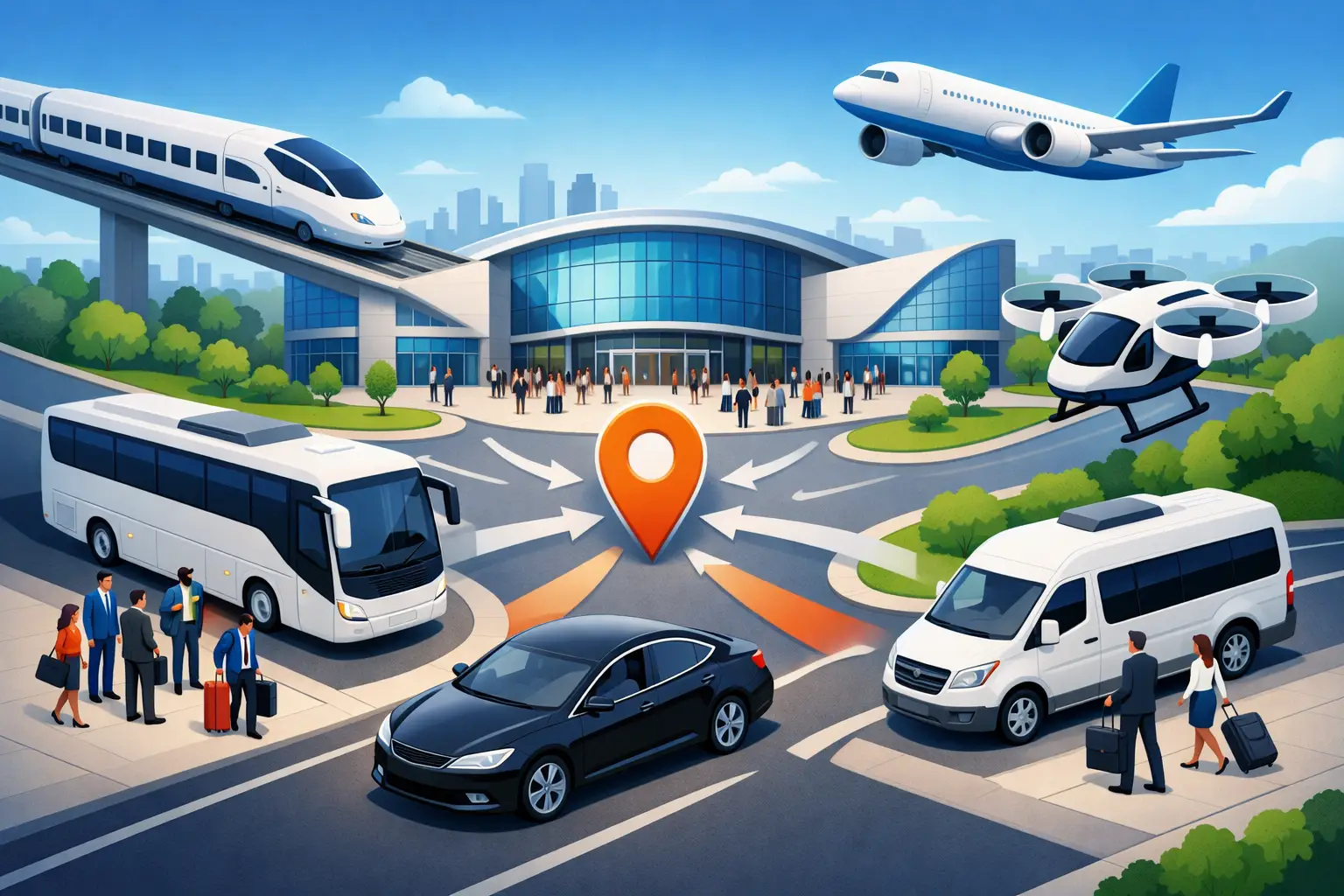
The best transport options for congresses usually solve five issues at once: punctual arrivals, easy wayfinding, discreet handling of high-profile guests, flexibility for last-minute changes, and a level of comfort that matches the event itself. In practice, there is rarely one single solution that covers everything. The right answer is often a transport mix.
Chauffeur service for VIPs, speakers, and decision-makers
For high-level congress travel, chauffeur service is often the strongest option. It offers control, discretion, and timing that public or shared systems cannot match. This matters most when the guest is a keynote speaker, senior executive, diplomat, sponsor representative, or anyone whose delay would affect the program.
A professional chauffeur service works especially well for airport pickups, hotel-to-venue transfers, multi-stop schedules, and evening hospitality. It also reduces friction for international guests who may not know the local transport system, language, or venue access points. Instead of managing tickets, taxi queues, or pickup uncertainty, the guest is met directly and moved according to plan.
This option is also valuable when a congress takes place across several locations. In Switzerland, for example, a delegate may arrive in Zurich, stay in Bern, attend meetings in Interlaken, and return via Geneva. That kind of schedule rewards precision and local knowledge. A trained chauffeur with event experience can adapt in real time when flights shift, a meeting runs late, or venue access changes with little notice.
The trade-off is simple. Chauffeur-driven transport is not the right tool for every attendee. It is best reserved for guests whose time, visibility, or expectations justify a more controlled level of service.
Shuttle services for coordinated group movement
When a congress needs to move larger numbers of guests, shuttle transport becomes the practical backbone. This is often the best choice between official hotels and the venue, between the venue and gala locations, or from major arrival points during concentrated check-in windows.
Shuttles work well because they create predictability. Guests know where to board, organizers know the route, and the event team can manage volume more effectively. For mid-size and large congresses, that predictability is often more useful than giving every attendee an individual transport solution.
Still, shuttle planning has limits. If routes are too broad, travel times become frustrating. If schedules are too rigid, missed connections create tension at the registration desk. The best shuttle setup is not the one with the most vehicles. It is the one with the clearest timing, strongest signage, and realistic spacing between departures.
For premium congresses, organizers often pair shuttle systems with a separate chauffeur layer. The shuttle handles the main delegate flow, while individual cars cover speakers, hosts, and special guests. That split keeps service standards high without making the transport plan unnecessarily complicated.
Rail for intercity congress attendance
In Switzerland and across much of Europe, rail can be one of the best transport options for congresses when attendees are traveling between cities. Trains are reliable, efficient, and often well suited for guests moving from one urban center to another without needing door-to-door support at every stage.
Rail is particularly effective for participants who are already comfortable traveling independently and who are attending a straightforward itinerary: hotel, venue, and return. It can also support sustainability goals, which matter for many corporate and association events.
However, rail has to be evaluated honestly. It performs best when stations are close to hotels and congress venues, when luggage is light, and when arrival windows are forgiving. It is less ideal for late-night arrivals, tightly timed executive schedules, or guests unfamiliar with the language and local connections. If a missed train means a delayed panel or a failed client dinner, the savings in convenience can disappear quickly.
A common mistake is assuming that efficient public infrastructure removes the need for premium ground transport. In reality, rail often works best as one part of the chain, supported by chauffeur transfers at the beginning or end.
Taxis and ride-hailing for flexible individual use
Taxis and ride-hailing services can be useful for overflow demand, ad hoc movements, and lower-priority individual trips. They are convenient when a delegate leaves at a different hour, adds an unscheduled dinner, or misses the organized shuttle.
For organizers, though, these options offer less control. Vehicle quality varies, wait times can spike during peak hours, and service consistency is harder to guarantee when large numbers of guests are moving at once. For standard attendees, that may be acceptable. For hosted buyers, senior management, or invited speakers, it often is not.
There is also the question of arrival experience. A congress that invests heavily in branding, hospitality, and program quality may not want its most important guests left to navigate traffic and pickup points alone. Taxis have their place, but they are usually best treated as a backup layer rather than the core event transport plan.
Private vans and executive minibus solutions
Some congress groups fall between individual executive cars and full shuttle systems. Board delegations, sponsor teams, media crews, and small hosted groups often benefit from private vans or executive minibuses. This format keeps the group together, protects timing, and preserves a higher service level than public or shared transport.
It is especially effective for site visits, partner programs, and congresses with multiple side events. Rather than dispatching several sedans or pushing the group into a large scheduled shuttle, one dedicated vehicle keeps coordination cleaner. It also allows luggage handling, materials transport, and route adjustments without affecting the wider attendee flow.
This is one of the most overlooked event transport choices. Not because it is niche, but because it solves a very specific operational problem extremely well.
How to choose the best transport options for congresses
The right model depends less on the size of the event than on the profile of the guests and the structure of the agenda. A 150-person executive congress may need more individualized transport than a 1,000-person association meeting. Volume matters, but complexity matters more.
Start with the moments that carry the most risk. Airport arrivals for keynote speakers, transfers for evening receptions, early-morning departures for panelists, and movements between split venues deserve the highest level of planning. Once those are secured, the wider attendee flow becomes easier to design.
It also helps to separate guests into service tiers. Not every attendee needs the same transport standard, and pretending otherwise can create unnecessary cost or unnecessary friction. A well-run congress usually has one mobility plan for VIPs, one for managed group transport, and one for independent participants.
Communication is just as important as vehicle choice. Guests need clear pickup instructions, venue access details, and a contact point that actually responds when plans change. Premium transport is not only about the car. It is about reducing decision-making for the passenger.
For organizers working with a professional chauffeur partner, the biggest advantage is often not luxury alone. It is operational calm. An experienced provider understands discreet meet-and-greet procedures, multilingual guest handling, tight timetables, and the kind of adaptability that congress schedules demand. That is where brands such as Berner Limousine fit naturally into high-standard event mobility.
The smartest congress transport plan is rarely the most visible one. It is the one that keeps guests composed, speakers punctual, and organizers out of crisis mode from the first arrival to the final departure.