
Interlaken does not reward rushed arrivals. Between the deep-blue lakes, the changing weather, and the unmistakable silhouette of the Jungfrau, the final approach sets the tone for the stay ahead. For guests searching for Grand Hotel Victoria Jungfrau, history alive describes something more meaningful than an overnight reservation: a destination where more than a century of Alpine hospitality is still felt in every detail.
The Victoria-Jungfrau Grand Hotel & Spa stands at the center of Interlaken with the confidence of a property that has welcomed generations of international travelers, families, statesmen, and leisure guests. Its appeal is not based on nostalgia alone. It is the rare combination of historic character and contemporary expectations: formal public rooms, a commanding mountain setting, attentive service, and the privacy that discerning guests expect.
Grand Hotel Victoria Jungfrau: History Alive in Interlaken
Interlaken emerged as one of Europe’s great resort destinations during the nineteenth century, when rail travel made the Bernese Oberland accessible to travelers seeking pure air, dramatic scenery, and refined accommodation. The hotel’s roots reach back to that formative period. Over time, the Victoria and Jungfrau names became associated with the high standard of hospitality that international visitors expected from this Alpine crossroads.
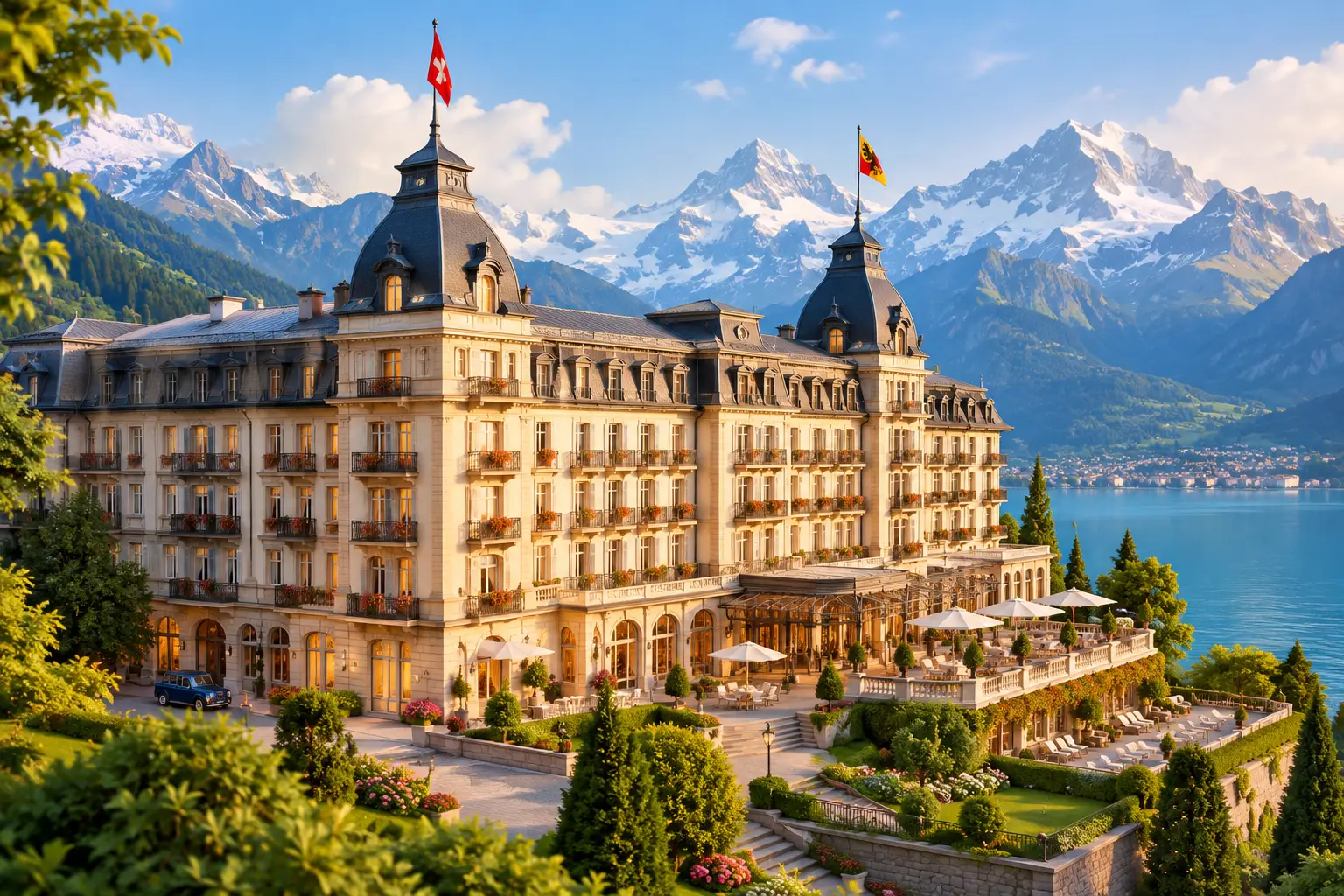
That heritage remains visible before a guest even enters the building. The grand facade faces the Höhematte, the broad green space that opens the view toward the Jungfrau massif. It creates a sense of arrival that is increasingly rare: no anonymous entrance road, no interchangeable setting, and no need to manufacture atmosphere. The location has its own authority.
Historic hotels can sometimes ask guests to compromise, offering charm at the expense of efficient service or modern comfort. A leading property must avoid that trade-off. The lasting strength of the Victoria-Jungfrau lies in its ability to preserve the ceremony of a classic grand hotel while meeting the needs of a current international clientele. Business travelers need a reliable schedule. Families need calm coordination. Private guests may value discretion above all else. The experience must accommodate each of them without becoming impersonal.
Why the Arrival Matters
For a hotel with this level of heritage, arrival is not a minor logistical detail. It is the first private moment of a stay, and it can be either composed or unnecessarily demanding.
Interlaken is well connected, but a journey through the Bernese Oberland involves variables that experienced travelers prefer to remove from the equation. Flight schedules change, road conditions vary with the season, and guests arriving with luggage, children, ski equipment, or a demanding itinerary should not have to navigate local transport after a long journey. A professional chauffeur service brings structure to the final stage: collection at the agreed location, luggage assistance, a prepared vehicle, and a direct transfer to the hotel entrance.
For a guest arriving from Zurich, Geneva, Basel, or Bern, the drive also has value beyond convenience. It creates a protected interval between transit and hospitality. Calls can be completed privately, plans can be reviewed, or the guest can simply rest while the Alpine landscape comes into view. This is particularly relevant for executives and international visitors who have spent hours in airports, meetings, or connecting trains.
The right vehicle choice depends on the party and purpose. A sedan suits an individual executive or couple seeking a quiet, elegant arrival. A luxury van gives families, small groups, and guests with substantial luggage the room they need without sacrificing presentation. For wedding guests, delegates, or VIP itineraries, coordinated transportation protects timing and ensures that every arrival reflects the occasion.
A Setting Built for More Than a Weekend
The Victoria-Jungfrau is often associated with leisure, and rightly so. Interlaken offers immediate access to mountain excursions, lake experiences, scenic rail journeys, and year-round outdoor pursuits. Yet its position also makes it effective for private celebrations, executive retreats, conferences, and multi-stop Swiss itineraries.
For leisure guests, the advantage is proximity without pressure. A morning departure toward Grindelwald, Lauterbrunnen, or the mountain railways can be organized around the pace of the party, rather than fixed public schedules. In winter, reliable transport is particularly valuable when conditions change quickly and equipment adds complexity. In warmer months, a chauffeur can make it practical to combine lakeside stops, panoramic routes, and dining reservations without dividing the group across several vehicles.
For corporate travelers, Interlaken offers a different kind of value. The setting is memorable enough for a leadership meeting or incentive program, while the hotel environment supports the standards expected for high-level hospitality. Here, transportation is part of event management. A delayed pickup, an unclear meeting point, or vehicles that do not match the group can affect a program far beyond the transfer itself. Advance planning, named contacts, multilingual chauffeurs, and a clear run sheet make the difference.
Discretion Is Part of the Service
Grand hotels are public places, but many guests require a private way of moving through them. That may include senior executives, public figures, diplomats, families, or travelers who simply prefer not to draw attention. Discretion begins long before the vehicle reaches the entrance.
A professional chauffeur understands that privacy is operational, not performative. It means punctual arrival without repeated calls, respectful assistance without intrusion, and an awareness of when conversation is welcome and when quiet is preferable. It also means flexible coordination when a schedule changes. A guest may leave earlier than planned, extend a meeting, or require an unannounced stop. The service should respond calmly, with no visible disruption.
For sensitive itineraries, the details matter: a clean and appropriately presented vehicle, a chauffeur familiar with the route, space for luggage handled carefully, and coordination with hotel staff when required. These are not luxuries in the abstract. They are the practical standards that allow guests to focus on the purpose of their stay.
Planning an Arrival That Feels Effortless
The most successful transfers are arranged with enough information to anticipate needs, but without turning a simple request into an administrative burden. At minimum, the pickup point, time, passenger count, luggage requirements, and any onward plans should be clear. For airport arrivals, flight details help the chauffeur adapt to timing changes. For special events, a short itinerary prevents confusion at key moments.
It is also worth considering the return journey when booking the inbound transfer. Early flights, private rail connections, and multi-city schedules are easier to manage when the transportation plan is already in place. Guests checking out from a historic hotel should not have to end the experience by searching for a last-minute vehicle.
Berner Limousine supports transfers to and from Interlaken with professional chauffeurs, premium Mercedes-Benz vehicles, and 24/7 coordination for guests who expect a dependable, discreet arrival. The service is particularly well suited to airport pickups, private touring, business programs, and occasions where timing and presentation must be handled without compromise.
A stay at the Victoria-Jungfrau deserves an arrival that respects its setting. Let the mountain views be the first thing that asks for your attention, not the mechanics of getting there.