

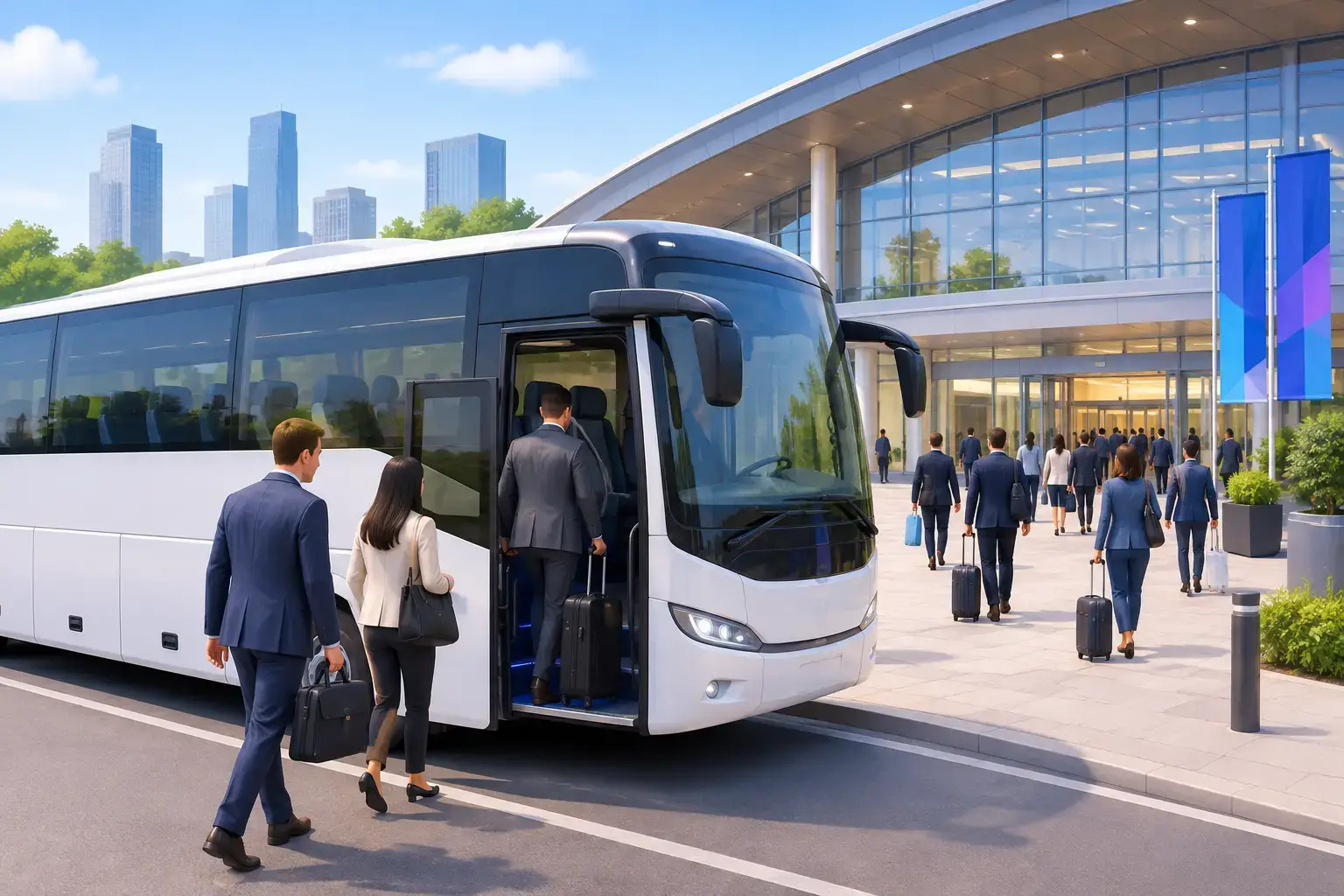
A strong conference transport example is not a fleet of cars waiting outside a venue. It is a coordinated operating plan that brings every guest, speaker, executive, and VIP to the right place at the right time, without creating unnecessary attention or delays. For a corporate conference, a diplomatic meeting, or a high-profile hospitality event, transportation is often the first service guests experience and the last one they remember.
The difference lies in preparation. When flight arrivals shift, a keynote runs late, or a principal guest needs a private departure, the transport plan must adapt quietly. That requires experienced coordination, professional chauffeurs, and vehicles selected for the people and movements involved.
Conference Transport Example: A Two-Day Executive Event
Consider a two-day leadership conference in Bern for an international company. The program brings together 80 delegates, 12 senior executives, six keynote speakers, and several guests arriving from overseas. Participants stay at two hotels, while the conference takes place at a separate venue. The agenda includes a formal dinner on the first evening and individual airport departures throughout the second day.
At first glance, the assignment appears straightforward: collect guests, take them to the hotel, and provide transfers to the venue. In practice, it involves different levels of service, changing schedules, luggage requirements, security considerations, and multiple points of contact. Treating every movement as a standard shuttle would compromise comfort, timing, and the event’s overall presentation.
The transport concept begins with a passenger manifest. This document records flight details, mobile numbers, preferred languages, hotel assignments, luggage volume, and special requirements. It also distinguishes between group movements and individual executive transfers. The organizer and transport coordinator should agree on one current version, especially when international arrivals are involved.
Arrival Day: Individual Attention Without Friction
For arriving delegates, the preferred approach depends on their flight pattern. If a number of guests land within a short window, scheduled luxury van transfers may be appropriate. Each vehicle can accommodate passengers and luggage comfortably while reducing the number of individual movements. A chauffeur or event coordinator can confirm hotel destinations before departure and keep the group informed if traffic conditions change.
Senior executives, keynote speakers, and guests with tight onward schedules should generally receive individual chauffeur-driven transfers. Their chauffeur monitors the relevant flight, adjusts the pickup time where necessary, and meets the guest at the agreed arrival point. This avoids the common problem of an executive waiting for other passengers after a long-haul flight or searching for transport in an unfamiliar airport.
For international events, multilingual chauffeurs add practical value. They can welcome guests professionally, confirm the itinerary, and answer straightforward local questions without turning the transfer into an intrusive conversation. The appropriate standard is attentive and discreet: available when needed, reserved when privacy is preferred.
Build Transport Around the Agenda, Not Just the Venue
The central conference days require more than a morning hotel-to-venue run. A dependable plan accounts for registration times, staggered arrivals, early speaker call times, lunch appointments, media commitments, and guests who may need to leave before the final session.
In this example, delegates are divided into departure groups based on hotel location and conference registration slots. The first wave travels early enough to allow for security checks and informal networking before the program begins. A second wave follows for attendees who are not required for the opening session. Rather than operating vehicles continuously with no structure, the coordinator establishes clear time windows and reserves capacity for late adjustments.
Executives should not be tied to the group schedule. A dedicated sedan or van remains available for principal movements between the hotel, venue, private meetings, and airport. This is particularly useful when a board member must join a breakfast meeting across town or a speaker needs to depart immediately after a presentation.
The right vehicle mix matters. Sedans suit individual executive transfers and discreet VIP service. Luxury vans work well for small teams, speakers traveling together, and guests with additional luggage. Larger group vehicles may be suitable for delegates on the same schedule, but they should never be used simply because they reduce the number of trips. Comfort, access, and the expected level of service must remain appropriate to the event.
Evening Program: The Moment Plans Are Most Tested
A formal dinner often creates the most demanding conference transport window. Guests leave the venue at different times, traffic can be heavier, and the event schedule may move later than planned. A rigid return schedule leaves organizers dealing with frustrated guests or empty vehicles waiting without direction.
For the dinner in this conference transport example, delegate vehicles depart in planned waves, while a small reserve remains ready for executives, hosts, and guests whose obligations run beyond the main program. Chauffeurs receive live updates through one transport contact rather than responding to conflicting instructions from multiple attendees.
This arrangement protects discretion as well as punctuality. A VIP guest can leave privately when required, while other attendees continue enjoying the evening without being asked to accommodate someone else’s schedule. The same principle applies to hosted dinners in Zurich, Geneva, Interlaken, or Gstaad, where traffic patterns, access restrictions, and seasonal conditions may affect timing.
The Control Point Makes the Difference
The most effective event transport plans have one accountable control point. This may be an on-site transport manager, a designated event representative, or a direct line to the chauffeur service’s operations team. What matters is that chauffeurs receive reliable, current instructions and the organizer knows whom to contact at any hour.
A single control point prevents small changes from becoming operational problems. If a speaker’s flight is delayed, the coordinator can move a vehicle assignment. If a meeting ends 20 minutes early, the departure can be brought forward. If weather affects an airport transfer, the team can adjust the route or dispatch time before the guest is inconvenienced.
There is a trade-off to consider. Highly detailed schedules create clarity, but they can become difficult to manage if every movement requires formal approval. A better model combines a fixed core schedule with reserved vehicles and defined decision authority for exceptions. The organizer maintains control over the event while the transport team retains enough flexibility to solve immediate issues.
Departure Day Requires the Same Discipline
Departures are frequently underestimated because guests leave individually and the conference program is winding down. Yet the final transfer can strongly influence how an attendee remembers the entire event. Missed flights, insufficient luggage space, or confusion at hotel reception can undo an otherwise excellent experience.
For this reason, departure planning should begin before the conference opens. Flight numbers, recommended pickup times, and vehicle assignments should be confirmed in advance, then checked again as the event progresses. Guests with early flights may require departures before breakfast; others may want to combine a final meeting with their airport transfer. These movements call for individual attention, not a generic shuttle timetable.
A professional chauffeur service monitors timing, arrives early, assists with luggage, and selects a route appropriate to traffic and airport procedures. If an itinerary changes, the guest should have a clear contact channel rather than needing to negotiate transport through several people.
What Organizers Should Confirm Before the Event
Before approving a transport plan, organizers should establish the number of guests, arrival and departure patterns, hotel and venue access, VIP requirements, luggage expectations, and the likely need for last-minute changes. They should also clarify who may authorize changes on event days and how updates will be communicated.
It is equally wise to ask how chauffeurs are briefed. They should know the event name, pickup points, passenger names where appropriate, preferred routes, venue entrance instructions, and the required level of discretion. For sensitive events, chauffeurs should also understand that they may need to wait nearby without drawing attention to a guest’s movements.
Berner Limousine supports conference and event mobility with experienced chauffeurs, premium Mercedes-Benz vehicles, and around-the-clock operational availability. For organizers, this means transportation can be managed as a professional part of the guest experience rather than as a last-minute logistical concern.
The best conference transport plan is rarely noticed by attendees. They simply arrive composed, on time, and ready for the purpose of the event. That quiet reliability is exactly what turns transportation from a logistical necessity into a service that supports the reputation of the host.