

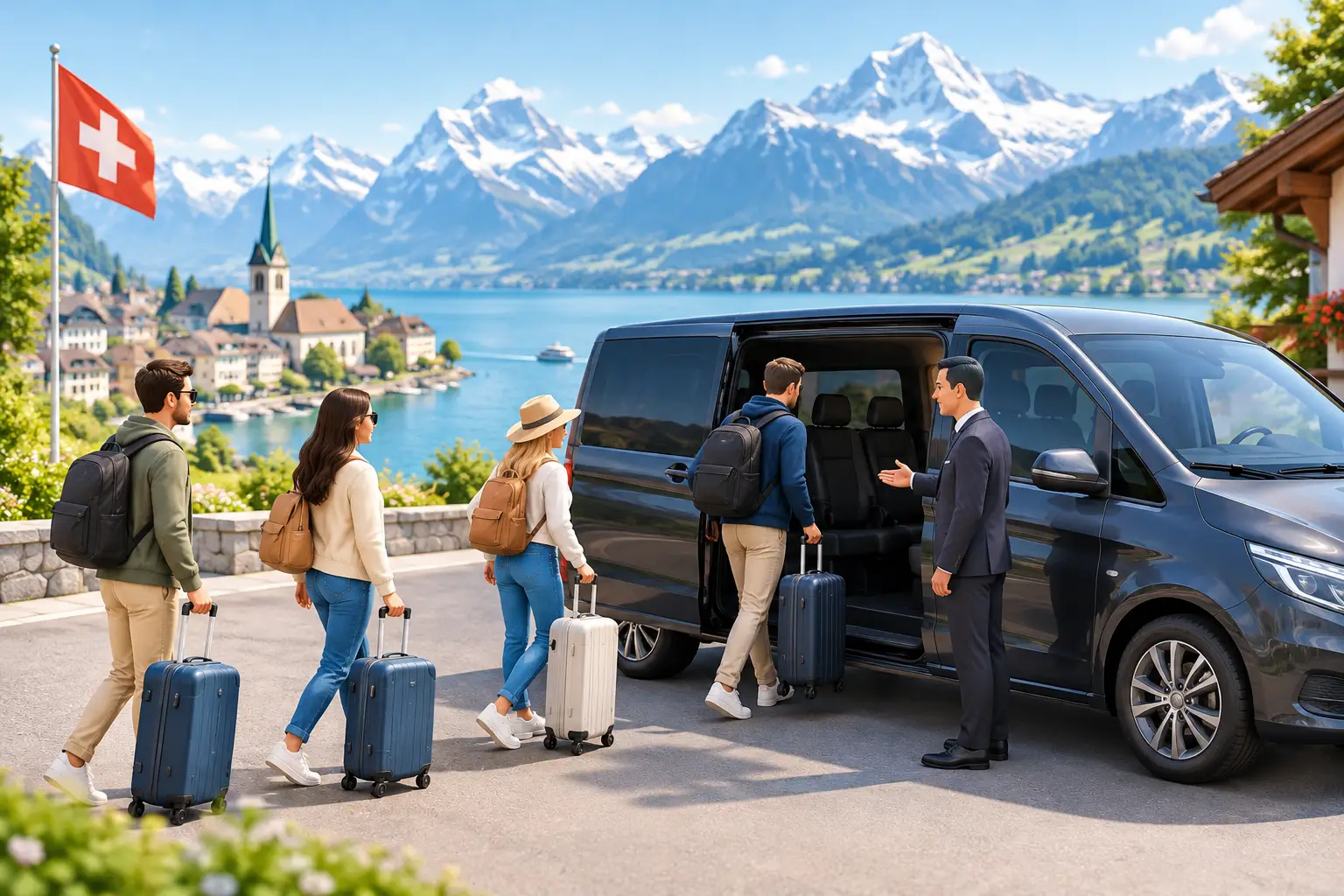
A group arriving on different flights at Zurich, heading to a conference in Bern, or checking into a mountain hotel near Interlaken has one shared priority: nobody should be left managing luggage, directions, or last-minute transport changes. The best options for group transfers are those that match the group’s size, schedule, luggage volume, and required level of privacy – not simply the vehicle with the most seats.
For executive travel, family celebrations, international delegations, and destination events, the right transfer plan creates a composed first impression and keeps the itinerary under control. It also gives every guest the same standard of care, from airport arrival to final departure.
What Defines the Best Options for Group Transfers?
A quality group transfer is planned around the entire journey, not only the route from point A to point B. Passenger count matters, but so do ski bags, conference materials, child seats, mobility needs, flight schedules, hotel access, and the possibility that plans may change during the day.
The most suitable solution often falls into one of three models: an executive van for one traveling party, a luxury minibus for a larger group moving together, or a coordinated fleet of premium vehicles for guests with different arrival times or destination requirements. Each model serves a distinct purpose.
A chauffeur service adds value where self-organized transport tends to become complicated. A professional chauffeur monitors the agreed schedule, assists with luggage, understands access restrictions at hotels and event venues, and provides discreet support without becoming intrusive. For international guests, multilingual service can also make the arrival experience more comfortable from the first meeting point.
Executive vans for small groups traveling together
An executive van is usually the strongest choice for small groups who want to remain together. It works particularly well for families, management teams, visiting clients, wedding parties, and travelers connecting an airport with a hotel, chalet, or business location.
The benefit is not merely extra seating. Compared with separate cars, everyone arrives at the same time, conversations can continue in private, and the group has a single point of contact. This is useful when timing matters, such as a transfer from Geneva Airport to a meeting in Lausanne or an evening arrival in Gstaad.
Capacity should be assessed realistically. A vehicle that accommodates several passengers comfortably on paper may not be the right fit when everyone has large suitcases, garment bags, ski equipment, or presentation cases. A professional provider should ask about luggage before confirming the vehicle, rather than discovering the limitation at the curb.
Luxury minibuses for larger parties
For larger groups with a common itinerary, a luxury minibus offers the clearest operational advantage. It keeps the party together while avoiding the coordination issues that can arise when several vehicles leave separately, encounter traffic differently, or arrive at different entrances.
This option is well suited to corporate retreats, hotel guest movements, golf groups, touring families, wedding guests, and delegates attending congresses. It is also practical for routes where parking is limited or venue access is controlled. One coordinated arrival is easier for a hotel concierge, event manager, or private residence host to receive.
There is a trade-off. A larger vehicle requires appropriate access at both ends of the route. Historic city centers, narrow mountain roads, and private chalets may have limited turning space or restricted access. In these cases, a carefully planned combination of vehicles may be more elegant and more practical than sending one large minibus to an unsuitable location.
Coordinated premium vehicles for complex itineraries
When guests arrive at different times, require different levels of privacy, or need to travel to separate destinations, a coordinated fleet is often the better answer. This approach is common for executive meetings, diplomatic visits, VIP hospitality, incentive programs, and high-profile events.
Rather than trying to place every guest in one vehicle, the transfer plan assigns the right vehicle and chauffeur to each movement. Senior executives may require individual travel, while colleagues, family members, or support staff can travel together. Every transfer remains connected to one central schedule and one service standard.
This format is especially valuable for multi-day programs. Guests may need airport pickups, dinner transfers, site visits, hotel shuttles, and final departures. With one experienced transportation partner managing those movements, organizers have fewer operational details to chase and guests receive clear, consistent communication.
Choosing Group Transportation by Occasion
The best vehicle arrangement changes according to the purpose of the trip. A transfer for a board delegation should not be planned in the same way as transport for a wedding party or a sightseeing group.
For corporate groups, punctuality and discretion take priority. The transfer should allow for delayed flights, security-sensitive schedules, and direct coordination with assistants, hotels, or event teams. A fleet arrangement may be appropriate when senior guests need separate cars, while an executive van can keep a working team together between meetings.
For weddings, comfort and timing are equally important. Guests may be traveling from several hotels to the ceremony and then returning after the celebration at different times. A structured shuttle plan helps avoid guests getting lost, arriving late, or having to designate drivers. It also allows the couple and close family to travel in a more private setting.
For leisure groups, route knowledge matters. A day from Lucerne to Interlaken or a transfer into the Alps can involve changing weather, seasonal traffic, and luggage that is more substantial than expected. A chauffeur who knows the region can plan sensible departure times and select appropriate stopping points without turning the journey into a logistical exercise for the guests.
For airport groups, flight coordination is central. Guests on the same booking may still arrive from different terminals or have different baggage collection times. The meet-and-greet process, waiting arrangements, and departure point should be agreed in advance. This is particularly important after long-haul arrivals, when travelers should not need to make additional calls to locate their transportation.
Details That Make or Break a Group Transfer
The difference between adequate transportation and a well-executed group transfer is often found in the details. Start with a complete passenger manifest that includes names, mobile numbers where appropriate, arrival details, and the preferred language for key contacts. For VIP or corporate travel, the provider should also understand how visibly the service should operate. Some guests appreciate a prominent meet-and-greet, while others prefer a more discreet arrival.
Luggage deserves the same attention as passenger numbers. A group of eight with cabin bags is very different from a group of eight traveling for a week in the mountains. Sports equipment, strollers, instruments, and event materials should be declared when the transfer is reserved. If needed, an additional luggage vehicle can be a more comfortable solution than compromising passenger space.
Build realistic time into the schedule. Airport transfers should account for baggage collection and customs, while event transfers should account for venue access and security procedures. For mountain routes, weather and road conditions may require additional flexibility. A reliable chauffeur service will not promise an unrealistic timeline simply to make the itinerary look more efficient.
Communication should remain simple for guests. They need to know where to meet the chauffeur, who to contact if their plans change, and what vehicle has been assigned. Behind the scenes, the operation may be detailed. For the passenger, it should feel calm and clear.
Why Chauffeur Service Is Different From a Basic Group Ride
A basic ride can move people between locations. A premium chauffeur service is responsible for how that movement reflects on the host, company, or family organizing it. The vehicle is prepared, the chauffeur is professionally presented, and the route is managed with the guest experience in mind.
This matters when transporting clients, executives, or international visitors. A clean, well-maintained luxury vehicle and a courteous chauffeur send a message before the meeting begins. It also matters for private occasions, where guests should be able to enjoy the day without discussing parking, navigation, or the return journey.
Berner Limousine GmbH plans group movements with this wider responsibility in mind, from airport coordination and executive vehicles to event transportation and multi-stop itineraries across Switzerland and neighboring European destinations. The aim is not to add unnecessary ceremony, but to provide the level of control and discretion that demanding groups expect.
The right group transfer plan begins with a practical question: what must this journey achieve for the people traveling? When vehicle choice, luggage, timing, and guest expectations are considered together, transportation stops being a background concern and becomes a reliable part of a well-run day.