

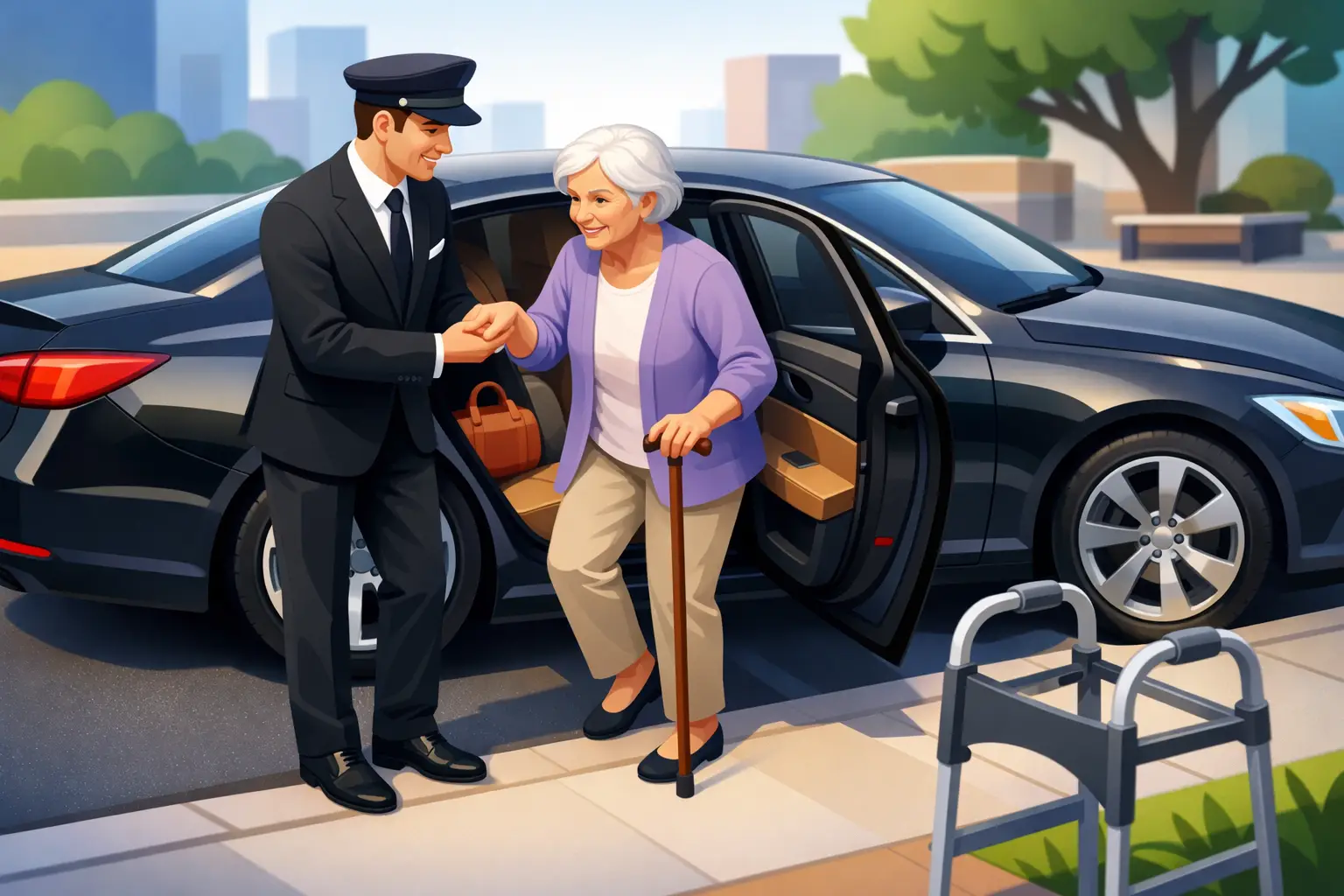
A transfer can feel very different when a passenger needs a little more time at the curb, a steady hand while stepping out, or reassurance that someone will meet them at arrivals. So, do chauffeurs assist elderly passengers? A professional chauffeur service should provide thoughtful, respectful assistance as part of a well-planned journey – without making the passenger feel rushed, singled out, or dependent.
For older travelers, the value is rarely just the vehicle itself. It is the confidence that the person behind the wheel understands the details that make travel calmer: arriving early, choosing a convenient pickup point, handling luggage carefully, and allowing enough time to enter and exit the vehicle comfortably.
What chauffeur assistance for elderly passengers includes
Chauffeur assistance is personal, but it is not one-size-fits-all. Some passengers simply appreciate a chauffeur opening the door and carrying luggage. Others may need the chauffeur to wait while they get settled, provide an arm for balance where appropriate, or walk with them from the vehicle entrance to the hotel reception, private residence, terminal entrance, or event door.
The essential standard is attentiveness with discretion. A trained chauffeur observes whether assistance is welcome, asks courteously before stepping in, and adapts to the passenger’s pace. That can mean positioning the vehicle where walking distances are shorter, selecting an easy-access door, or ensuring that a walker, cane, or folded wheelchair is securely stowed and readily available upon arrival.
For airport travel, assistance often begins before the passenger is in the car. A chauffeur can meet the traveler at a prearranged point, help with checked and hand luggage, and escort them to the vehicle. On departure, the chauffeur can bring luggage to the terminal entrance and make sure the passenger has time to orient themselves before leaving. This is particularly helpful at large airports, unfamiliar hotels, and busy event venues.
Do chauffeurs assist elderly passengers at the door?
Yes, door-to-door support is one of the clearest distinctions between a premium chauffeur service and an ordinary ride. The chauffeur should not merely stop at an address and wait for the next instruction. They should park safely, open the door, allow the passenger to exit at their own pace, and attend to luggage.
That said, “door-to-door” has practical limits. A chauffeur may accompany a passenger to a building entrance or reception area when requested and when access allows. They are not generally able to enter secure facilities, pass through airport security, or provide prolonged personal care inside a private home. Clear expectations protect the passenger’s comfort and ensure that the chauffeur can deliver the right level of support.
The best experience is quiet and unhurried. There is no need for excessive fuss. Many older passengers value independence and simply want the certainty that help is immediately available if they need it.
Respectful help is different from medical care
A chauffeur can provide mobility-aware transport assistance, but they are not a medical professional or personal care attendant. This distinction matters, especially when a traveler has reduced mobility, a recent injury, dementia, oxygen requirements, or a condition that creates a risk of falls.
A chauffeur can help with normal entry and exit, luggage, mobility aids, and a calm escort to the agreed handover point. They should not lift a passenger, transfer someone from a wheelchair into a seat, administer medication, or make clinical judgments. These tasks may require a family member, caregiver, medical transport provider, or specific equipment.
When booking, be direct about the level of support required. There is no need to disclose unnecessary medical details. It is enough to explain what will make the transfer safe and comfortable: for example, that the passenger walks slowly, uses a folding walker, needs a low step-in height, or should not be left alone at the destination. A reputable operator can then confirm what is possible and advise where additional support may be needed.
How to arrange a comfortable transfer
The most successful journeys are arranged with a few practical details in mind. First, share the exact pickup and drop-off locations rather than only the street address. A hotel main entrance, a private terminal meeting point, or a residence with level access can make a meaningful difference.
Next, mention any mobility aid and its approximate size. A cane is simple to accommodate, while a walker or folding wheelchair affects vehicle selection and luggage space. If a passenger finds low seating difficult, say so in advance. The right vehicle and a chauffeur who knows what to expect are more valuable than trying to solve the issue at the curb.
Timing deserves equal attention. An older passenger may need extra minutes to gather belongings, use a restroom before departure, or move through a busy lobby. Scheduling with a reasonable buffer reduces pressure for everyone involved, particularly for flights, medical appointments, cruise departures, family celebrations, and long-distance journeys.
Finally, establish the handover plan. If a relative, hotel concierge, host, or caregiver will meet the passenger, confirm where and when. This is especially reassuring for travelers who are unfamiliar with the destination or who may feel unsettled after a long flight.
Vehicle comfort matters more than appearance alone
A luxury sedan or van provides a refined setting, but comfort for an elderly passenger depends on practical features as well. Supportive seating, generous legroom, climate control, a smooth ride, and easy access all contribute to a less tiring journey. A clean, quiet cabin also gives the passenger time to rest, make a phone call, or simply enjoy the route without unnecessary distraction.
Vehicle choice depends on the traveler. A sedan may be ideal for one passenger with light luggage and no mobility equipment. A larger vehicle can be better for family members traveling together, multiple bags, a walker, or a folding wheelchair. The goal is not to select the largest vehicle by default. It is to select the vehicle that allows the passenger to sit, enter, exit, and travel with ease.
In mountain destinations or during winter weather, experienced driving becomes another part of passenger care. Gentle acceleration, measured braking, and route planning reduce discomfort and build trust. For a transfer between Zurich, Bern, Interlaken, or Gstaad, a composed chauffeur can make changing weather and unfamiliar roads feel far less demanding.
Why families and executive assistants often book a chauffeur
Adult children often arrange transportation for a parent who prefers not to drive, is arriving from abroad, or is attending an important occasion alone. Executive assistants may make similar arrangements for senior executives, board members, or distinguished guests. In both cases, the requirement is simple: the passenger should be treated with courtesy, not processed as a booking reference.
A professional chauffeur service offers a single point of responsibility. The route, timing, vehicle, luggage, and arrival instructions are coordinated before the journey begins. For the person arranging the transfer, this brings reassurance. For the passenger, it creates a more personal experience with no need to navigate parking areas, wait for an unknown driver, or manage bags alone.
Berner Limousine approaches these transfers with the same discretion and preparation expected for executive, diplomatic, and private travel. The service should feel composed from the first confirmation through the final handover.
Questions worth asking before booking
Ask whether the chauffeur will provide meet-and-greet assistance, help with luggage, and wait while the passenger enters the building. Confirm that the chosen vehicle can accommodate any walker or wheelchair, and ask how the chauffeur will identify the passenger at an airport or hotel.
It is also sensible to confirm the cancellation or waiting arrangements if an appointment runs longer than expected. Medical visits, immigration lines, and flight arrivals are not always predictable. A service that communicates clearly when plans change is particularly valuable for elderly travelers and the people coordinating their care.
The most considerate chauffeur assistance is rarely dramatic. It is a door opened at the right moment, luggage handled without a request, a patient pace at the curb, and the quiet assurance that the passenger has arrived safely where they need to be.