

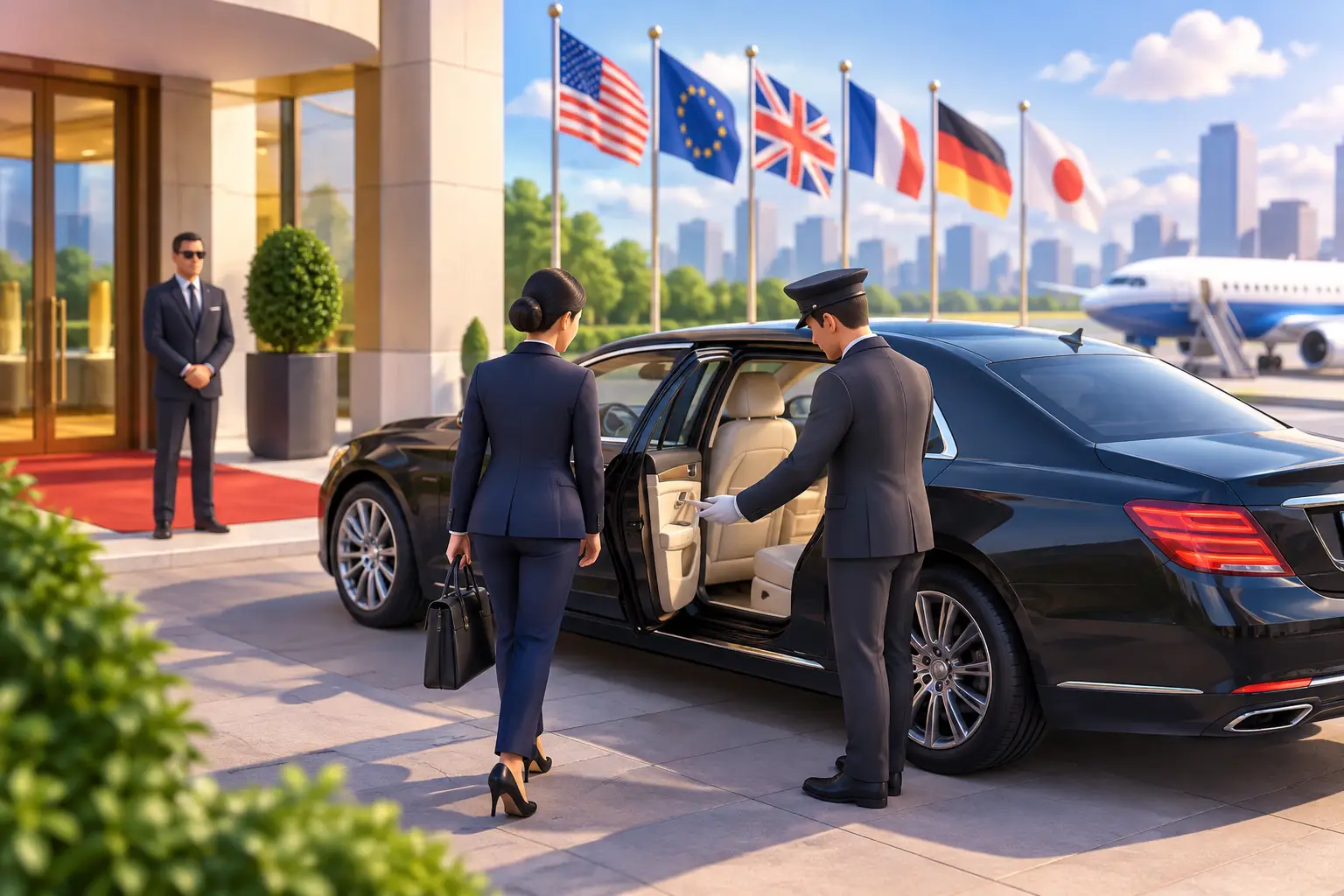
A diplomatic itinerary rarely allows room for improvisation. A delayed aircraft arrival, a last-minute meeting location, a motorcade adjustment, or a request for complete privacy can change the plan within minutes. Knowing how to choose diplomatic transportation means selecting more than a luxury vehicle. It means appointing a transportation partner that can protect the schedule, respect protocol, and remain composed under pressure.
For embassy representatives, delegations, official guests, corporate leaders, and event organizers, the right chauffeur service becomes a quiet but essential part of the operation. The standard is not merely a comfortable ride from point A to point B. It is dependable execution that supports the principal, the accompanying team, and the wider program.
Start With the Level of Assignment
Not every high-profile transfer carries the same requirements. A discreet airport reception for an ambassador differs from a multi-vehicle movement for a visiting delegation, and both differ from transport during a major international forum. Before selecting a provider, define the nature of the assignment clearly.
Consider who is traveling, how many passengers and pieces of luggage are involved, whether assistants or security personnel will accompany the principal, and how much flexibility the itinerary requires. Confirm whether the service is a single transfer, an hourly engagement, a roadshow between several venues, or a multi-day program across cities or borders.
This initial assessment prevents a common mistake: choosing a vehicle first and a service structure second. Diplomatic transportation should be organized around the movement plan, not around a car category alone.
Evaluate Chauffeurs Before the Fleet
A polished vehicle makes the right first impression, but the chauffeur determines whether the service actually meets diplomatic standards. The ideal chauffeur is punctual, professionally presented, multilingual when needed, and thoroughly familiar with discretion. They understand when to engage in conversation, when to remain silent, and how to respond to changes without bringing attention to the situation.
Ask how chauffeurs are selected, trained, and assigned. For sensitive movements, consistency matters. When possible, the same chauffeur should handle consecutive journeys for the same guest or delegation. Familiarity with preferences, routes, hotel procedures, and timing reduces unnecessary explanations and supports a calm experience.
Local knowledge is equally valuable. A chauffeur operating in Bern, Geneva, Zurich, Interlaken, or Gstaad should understand not only the quickest routes but also appropriate arrival points, traffic patterns during major events, and practical alternatives when conditions change. GPS is useful, but it is not a substitute for situational judgment.
Confirm Discretion Is Operational, Not Just a Promise
Discretion is often used as a marketing phrase. In diplomatic transportation, it must be reflected in daily procedures. That includes restrained chauffeur conduct, minimal discussion of passenger details, careful handling of contact information, and appropriate communication between the transportation provider and the booking contact.
The provider should be able to coordinate directly with an authorized representative while avoiding unnecessary calls or messages to the passenger. Arrival procedures should be agreed in advance: meeting point, signage requirements, luggage handling, guest identification, and who has authority to make itinerary changes.
Discretion also extends to presentation. The best service does not create a spectacle around the passenger. It provides an elegant, orderly arrival and departure while allowing the guest to move through the day with privacy and confidence.
Match the Fleet to the Mission
Diplomatic transportation requires vehicles that are impeccably maintained, clean, comfortable, and suited to the passenger profile. A luxury sedan may be the right choice for an individual executive or diplomat. A spacious premium van can be more appropriate for a small delegation, staff group, or guests carrying substantial luggage. Larger movements may require coordinated vehicles with unified standards and clear dispatching.
Vehicle selection should take account of the destination as well. A mountain transfer in winter, a long intercity journey, and an urban hotel arrival place different demands on the vehicle and driver. Comfort, luggage capacity, access, and weather suitability deserve consideration alongside appearance.
Do not assume that larger is always better. An oversized vehicle can be inconvenient at restricted entrances, historic city centers, or private residences. Conversely, assigning a sedan to travelers with security staff and multiple suitcases creates avoidable pressure at the curb. A capable provider will ask the practical questions before recommending a solution.
Look for Planning Discipline and Real-Time Flexibility
Official programs are built around precise schedules, but precise schedules still change. Flights arrive early or late. Meetings run beyond their allotted time. Security teams revise access arrangements. The transportation partner should have a clear process for monitoring flights, communicating with the authorized contact, and adjusting dispatch without confusion.
Reliable service begins well before the chauffeur arrives. Confirmations should state the essential details accurately: date, pickup time, passenger name or approved identifier, flight information where relevant, vehicle assignment, destination, and contact protocol. For complex programs, a single coordination contact is preferable to multiple disconnected conversations.
Ask how the provider handles contingencies. A credible answer will be practical rather than dramatic: backup capacity, route alternatives, 24/7 operational availability, and a clear escalation path. The goal is not to promise that nothing will change. It is to demonstrate that change will be managed quietly and professionally.
Assess Security Awareness With Appropriate Proportion
Security needs vary widely. Some assignments require only a discreet, experienced chauffeur and carefully planned timing. Others involve security teams, controlled access points, vehicle inspections, or coordination with hotel and venue personnel. The transportation provider must be able to work within the required framework without overstating its role.
Ask whether the team has experience supporting high-level events, official delegations, and sensitive arrivals. They should understand the importance of advance information, authorized contacts, route discipline, and controlled communication. At the same time, the provider should respect the boundaries of its responsibility and coordinate appropriately with the client’s own security personnel when they are involved.
A good partner does not complicate security arrangements with unnecessary procedures. It listens carefully, follows the agreed protocol, and keeps the transportation element dependable.
Consider Cross-Border and Multi-City Capability
Diplomatic and executive travel in Switzerland often extends beyond one city. A delegation may arrive in Geneva, hold meetings in Bern, continue to Zurich, and require transfers to an Alpine destination. Cross-border movements can add further complexity through timing, documentation expectations, and route planning.
Choose a provider with demonstrated experience in long-distance and international chauffeur assignments. The service should be prepared to coordinate realistic departure times, driver schedules, rest requirements, luggage needs, and any planned stops. For multi-day transportation, continuity of service is particularly valuable. It allows the provider to understand the rhythm of the program rather than treating each journey as an isolated booking.
Request Clear Accountability
Premium diplomatic transportation should feel personal, but it must also be accountable. The booking contact should know who is responsible for coordination before and during the assignment. This matters most when plans change outside regular office hours or when several vehicles are moving at once.
For organizations that book recurring travel, a provider that offers a dedicated contact and structured monthly administration can reduce internal workload. Consistent records, straightforward confirmations, and reliable follow-up allow executive assistants, protocol officers, hotel teams, and event planners to focus on the wider program.
Berner Limousine supports demanding assignments with professional multilingual chauffeurs, premium Mercedes-Benz vehicles, and around-the-clock coordination across Switzerland and Europe. For diplomatic travel, that combination matters because each detail must work without requiring the passenger to manage it.
Questions Worth Asking Before You Confirm
Before making a final selection, ask whether the provider can assign chauffeurs experienced with VIP and official guests, accommodate itinerary changes, coordinate with approved representatives, and provide the right vehicle configuration for passengers and luggage. Also clarify the arrival procedure, the point of contact, and the contingency plan if a flight or meeting schedule shifts.
The answers reveal more than a brochure ever can. A provider that asks informed questions in return is usually better prepared to deliver the right service.
Diplomatic transportation is ultimately judged in quiet moments: the chauffeur is already in position, the vehicle is exactly as expected, the route is handled intelligently, and the passenger arrives composed and on time. Choose the partner that makes those moments routine.