

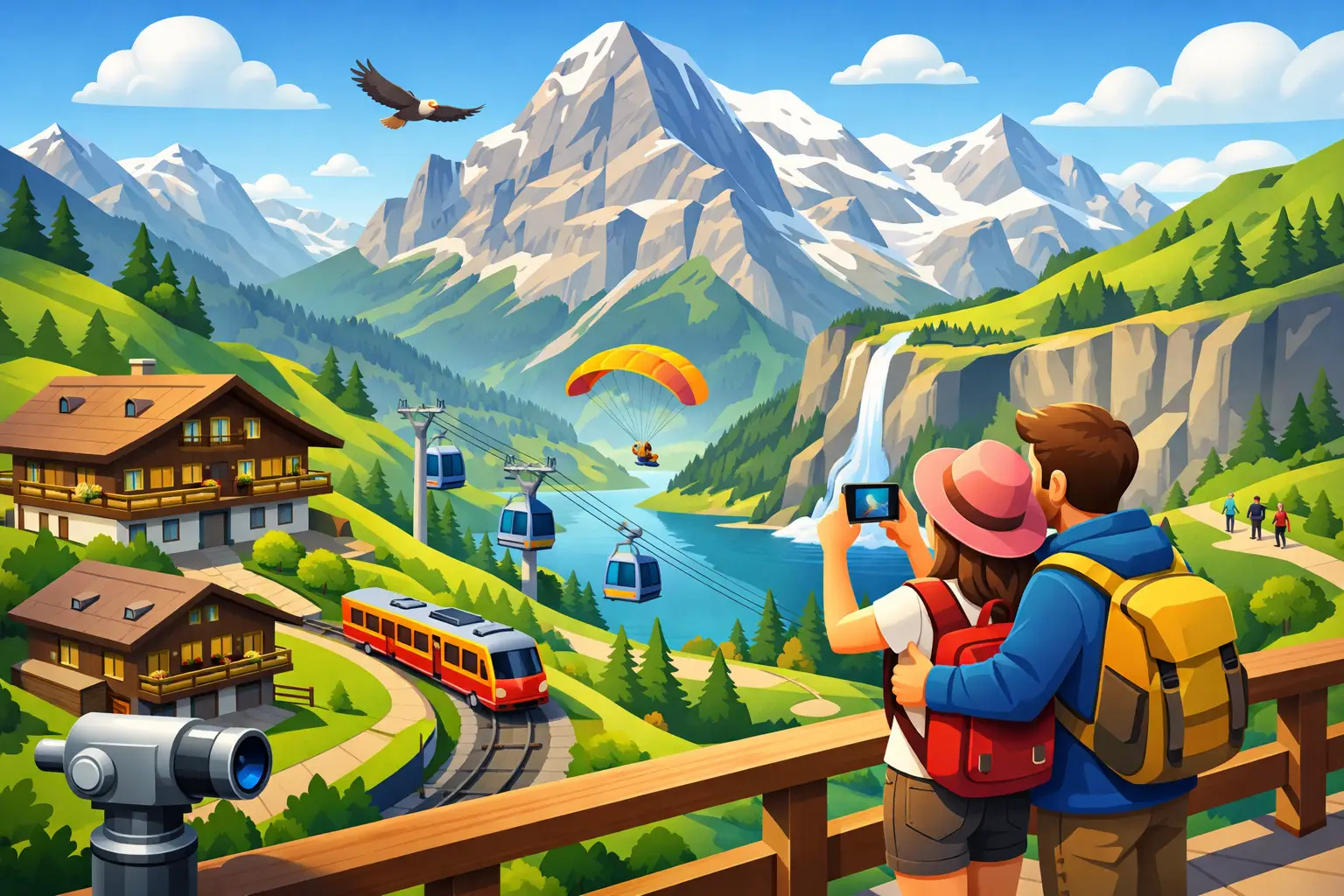
The view starts before you arrive. On the approach to Grindelwald, the valley opens slowly, the peaks come into frame, and suddenly a simple transfer turns into part of the experience. That is why sightseeing in Grindelwald rewards a little planning. This is not a destination where you want to waste time in the wrong queue, miss a weather window, or spend the day managing logistics when you came for the Alps.
Grindelwald attracts different kinds of travelers for good reason. Some want a polished day of mountain views, lunch with a terrace, and effortless transfers. Others want to fit several highlights into one day without feeling rushed. Families often need a calmer pace and dependable timing. Business travelers extending a Swiss itinerary by a day or two usually want the landscape without the friction. In every case, the same principle applies: the best day is the one that feels easy.
What makes sightseeing in Grindelwald different
Grindelwald is not just one viewpoint or one attraction. It works because the village, the mountain railways, the alpine roads, and the surrounding peaks all connect into a layered experience. You can stay low and enjoy the classic valley perspective, or go higher for dramatic views of the Eiger, Mönch, and Jungfrau. You can keep the day elegant and unhurried, or make it more active.
That flexibility is the strength of the destination, but it is also where visitors make poor decisions. Trying to see everything in one day often leads to waiting, rushing, and spending more time in transit than in the landscape. A better approach is to choose a style of day and build around it.
For many guests, there are three versions of Grindelwald that work especially well. The first is the scenic classic: arrival in the village, time to walk, a mountain ascent for signature views, and a relaxed meal. The second is the panoramic day: combining Grindelwald with nearby highlights such as Lauterbrunnen or Interlaken for a broader impression of the region. The third is the premium comfort approach: door-to-door transport, fewer transitions, and enough flexibility to adjust to weather and pace in real time.
The best way to structure your day
A strong Grindelwald itinerary starts with timing, not attractions. Morning usually offers the clearest visibility, especially in warmer months when clouds can build later in the day. If the mountains are your priority, arriving early improves your odds. If your priority is a more relaxed village experience, a later start can still work well, particularly outside peak periods.
It also helps to decide whether Grindelwald is your main destination or one stop in a wider Bernese Oberland day. If it is your anchor point, you can afford to move slowly and take in the atmosphere. If you are pairing it with other locations, discipline matters. Too many transitions dilute the day.
A practical rhythm is simple: arrive with enough margin, commit to one major mountain experience, then leave room for a second phase on the ground. That second phase might be coffee with a view, a short local walk, or a scenic drive onward. This structure gives the day shape without making it rigid.
Travelers used to urban itineraries often underestimate alpine variables. Conditions change. Visibility shifts. A cableway or train segment may be busy at exactly the wrong moment. That is why fixed appointments deep in the middle of a sightseeing day can be unhelpful. Build in space. Grindelwald is best enjoyed when you are not checking the clock every fifteen minutes.
Which sights deserve your time
The right answer depends on what kind of traveler you are. If your goal is the iconic postcard moment, focus on the high viewpoints and the direct mountain scenery. If you prefer a more composed day, the village itself and the surrounding valley perspectives can be just as satisfying. Not every memorable hour has to happen at the highest altitude.
First-time visitors usually benefit from choosing one marquee ascent and treating everything else as supporting scenery. This keeps the day balanced. A common mistake is stacking too many mountain segments and leaving no time to actually absorb the place.
Grindelwald First appeals to guests who want accessible alpine views with a touch of activity. It suits travelers who enjoy being out in the open and are comfortable with a more dynamic environment. Jungfraujoch, by contrast, is often chosen for status, altitude, and a more ambitious mountain experience. It can be impressive, but it also takes more time and commitment. On a short schedule, that trade-off matters.
Then there is the simple pleasure of the valley itself. The streets, hotel terraces, and open views toward the mountains give Grindelwald much of its character. If the weather is mixed, a lower-altitude day can actually feel more rewarding than chasing clouded summits.
Comfort is not a luxury detail in Grindelwald
In alpine destinations, comfort directly affects how much you see and how well the day flows. The issue is not extravagance. It is energy, timing, and control. A long day with multiple changes, parking uncertainty, crowded connections, and weather decisions made on the fly can wear down even experienced travelers.
That is why many guests prefer private transport for the approach and departure, especially when traveling from Zurich, Bern, Geneva, or another Swiss destination. A professional chauffeur service creates a cleaner day. Luggage is handled. Timing is clear. The route can be adapted if weather suggests a better order of stops. For international visitors, that also removes the stress of unfamiliar local logistics.
This matters even more for families, senior travelers, executive guests, and anyone traveling on a tight schedule. The Alps are stunning, but they are not the place to improvise every movement if your time is valuable. When the transport side is settled, the landscape gets your attention instead of the schedule.
Weather, season, and the reality behind the photos
Grindelwald is beautiful in every season, but each season asks for a different expectation. Summer gives longer days, greener valley scenes, and broad access. It also brings more visitors. Winter can feel exceptionally refined, especially when the village and surrounding slopes are clear and bright, but cold and snow conditions influence pace and mobility.
Shoulder seasons often appeal to travelers who prefer a quieter atmosphere. The trade-off is that conditions can be less predictable. Some guests see that as a disadvantage. Others appreciate the calm and are happy to let the day remain flexible.
The most useful mindset is simple: optimize for visibility, not for an exact script. If the peaks are clear, go up. If cloud cover closes in, shift toward scenic drives, village time, or a neighboring valley where the conditions are better. Experienced travel planning in Switzerland often comes down to making the right adjustment early, not forcing the original plan.
Practical decisions that improve the day
Small choices shape the entire experience. Footwear matters even if you are not hiking seriously. Layering matters because temperatures shift quickly between the village and higher elevations. Departure time matters more than most people expect.
So does where you begin the day. Starting directly from your hotel or residence with a private driver is very different from assembling the day through multiple transfers. For guests with high expectations, this is not about appearance. It is about preserving the quality of the day from the first hour.
If you are traveling as a couple, Grindelwald works best when the schedule leaves room for pauses. If you are traveling with children, reduce the number of changes. If you are hosting clients or VIP guests, prioritize reliability over ambition. A well-paced day with flawless handling will be remembered more favorably than an overloaded itinerary.
For travelers who value discretion and precision, Berner Limousine is the kind of partner that fits naturally into this setting: premium vehicles, professional chauffeurs, and the operational calm that keeps the focus on the destination.
When to combine Grindelwald with other destinations
Grindelwald pairs well with neighboring locations, but only if the route is curated carefully. Interlaken works as a practical arrival or departure point and can add a lakeside contrast to the mountain setting. Lauterbrunnen offers a different valley atmosphere and often complements Grindelwald well because the scenery feels distinct rather than repetitive.
The risk is trying to cover too much ground in one day. Scenic regions are deceptive that way. Distances may look manageable on paper, yet every stop takes longer than expected once you account for views, photos, parking, boarding times, and simple human nature. People want to linger where the landscape is exceptional.
A better standard is this: combine destinations only when each one still has room to breathe. Grindelwald does not need excessive additions to feel complete.
The best sightseeing in Grindelwald is not the busiest day. It is the one where the journey feels composed, the views arrive at the right pace, and every logistical detail stays in the background where it belongs.