

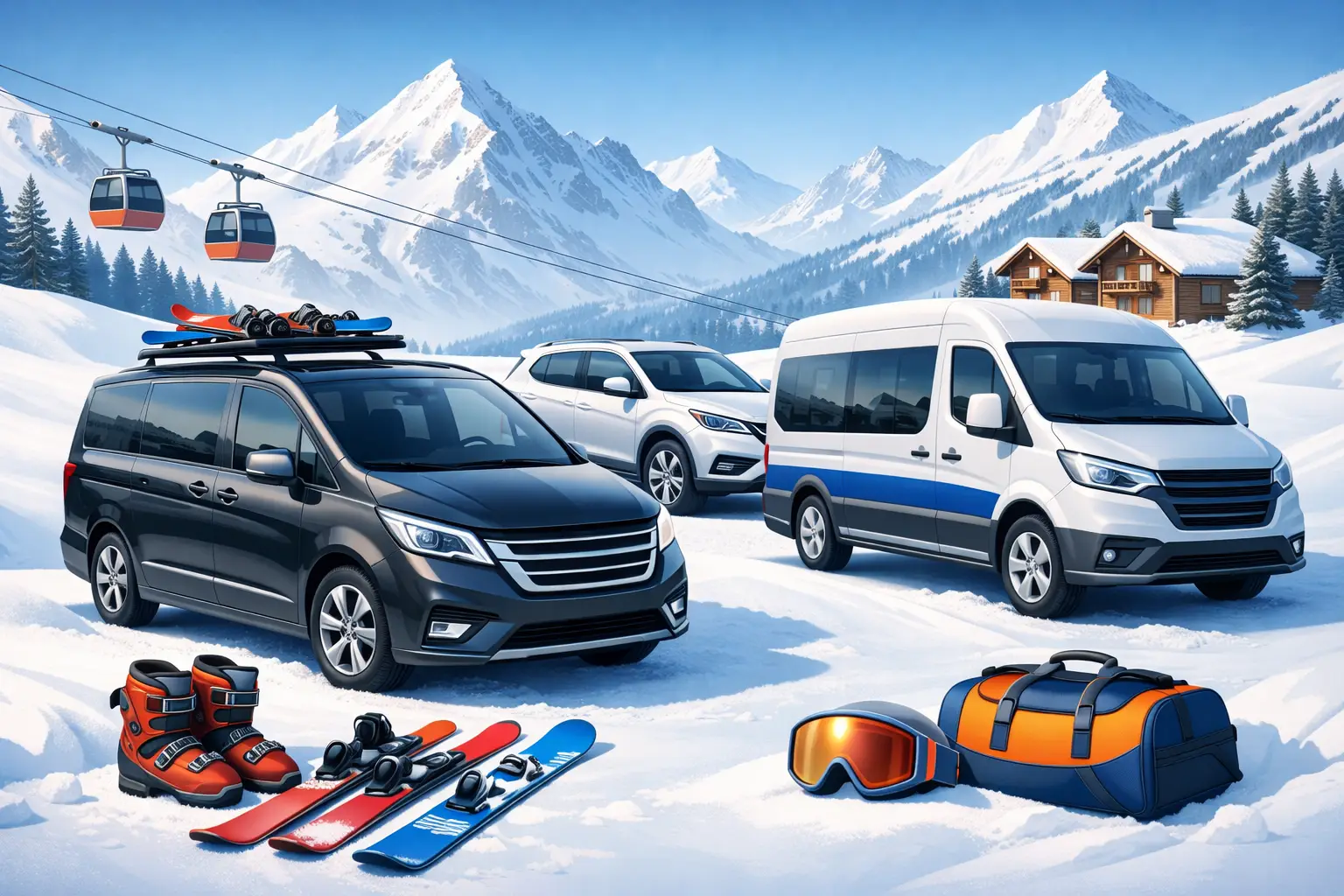
A winter arrival can become complicated before the first run is even in sight. Flight delays, heavy luggage, ski bags, changing road conditions, and a long drive to the resort all demand more than an ordinary car. The right ski transfer vehicles turn that first leg of the trip into a calm, private, and properly managed journey – whether you are traveling to Gstaad, Interlaken, Grindelwald, Zermatt, or another Alpine destination.
For guests who value time, comfort, and discretion, the vehicle is not a minor booking detail. It determines how comfortably the group travels, how safely equipment is carried, and how confidently the transfer proceeds when snow, traffic, or a last-minute itinerary change calls for experience.
What Ski Transfer Vehicles Need to Do Well
A suitable ski transfer vehicle must accommodate more than passengers. It needs room for skis or snowboards, helmets, boots, winter clothing, and the luggage that comes with a multi-day stay. At the same time, guests should not have to compromise on personal space simply because they are bringing equipment.
This is where a professionally planned chauffeured transfer differs from arranging a standard rental vehicle. A chauffeur service considers the complete travel party, the volume and shape of the equipment, the destination, and the weather conditions before the journey begins. The goal is not just to fit everything in. It is to ensure that everyone arrives rested and ready for the stay ahead.
Winter capability matters as much as capacity. Alpine roads may be dry at the airport and snow-covered higher in the mountains. A well-prepared vehicle, driven by a chauffeur familiar with Swiss winter routes, reduces unnecessary uncertainty during the final and often most demanding part of the journey.
Choosing the Right Vehicle for Your Party
The best choice depends on the number of travelers, the amount of equipment, and the nature of the trip. A couple traveling light for a weekend has different requirements from a family of five, an executive group attending a private event, or guests arriving with several sets of ski equipment.
Premium Sedans for Two or Three Guests
A premium sedan is an excellent option for individual travelers, couples, or small parties with moderate luggage. It offers a refined, quiet cabin and an appropriate setting for guests who want to work, take calls, or simply recover after a flight. However, equipment volume needs to be confirmed in advance. Ski bags can affect luggage capacity, particularly when several passengers are traveling together.
For a small party with limited equipment, a sedan provides an elegant and efficient airport-to-resort solution. For larger ski bags or additional winter luggage, a larger vehicle is usually the more comfortable decision.
Premium SUVs for Comfort and Flexibility
A premium SUV suits guests who appreciate more luggage space, a higher seating position, and added flexibility on winter routes. It is often the preferred choice for couples with extensive equipment, small families, and travelers who want room for both skis and personal luggage without creating a crowded cabin.
An SUV is not automatically the right answer for every group. Four adults with multiple ski bags may still require more capacity than one vehicle can comfortably provide. The important point is to plan for real luggage volume rather than relying only on passenger seats.
Vans for Families, Groups, and Ski Equipment
For families, groups of friends, corporate guests, or several travelers arriving on the same flight, a premium van is often the most practical ski transfer option. It provides generous seating, easier access, and a more realistic amount of room for winter equipment.
This category is particularly valuable when guests are traveling with child seats, bulky outerwear, multiple suitcases, and ski or snowboard bags. Instead of placing luggage around passengers or dividing the party between vehicles, a properly sized van keeps the journey together and organized.
For corporate hospitality, the additional space also supports a more composed arrival. Guests can speak comfortably, review the day ahead, or simply enjoy the drive without the feeling of a packed vehicle.
Why Equipment Planning Should Happen Before Arrival
The biggest avoidable problem with ski transfers is incomplete information. “Two passengers with luggage” can mean two carry-ons and a pair of skis, or it can mean two large suitcases, boot bags, helmets, and oversized snowboard cases. Those are entirely different transport requirements.
When arranging ski transfer vehicles, share the passenger count and describe every major item. Include ski or snowboard bags, the approximate number of suitcases, strollers, child seats, and any unusual luggage. If the itinerary includes a stop at a ski rental shop, private residence, or more than one hotel, that information is equally useful.
Clear planning protects comfort and avoids difficult decisions at the curb. It also allows the chauffeur service to assign the right vehicle from the start, rather than treating winter equipment as an afterthought.
The Chauffeur Matters as Much as the Vehicle
A luxury vehicle is only one part of a successful Alpine transfer. The quality of the chauffeur shapes the entire experience, especially in winter. Professional chauffeurs understand that punctuality is not limited to arriving at a scheduled time. It includes monitoring the travel plan, allowing for road conditions, assisting with luggage, and handling the route with calm judgment.
For international guests, a multilingual chauffeur also removes friction at an unfamiliar airport or resort. There is no need to explain directions to different drivers, negotiate luggage arrangements, or manage local transport after a long-haul flight. The journey begins with a clear welcome and continues with one responsible point of contact.
Discretion is equally relevant. A transfer may involve executives, public figures, families, or guests attending a private occasion. The service should feel attentive without becoming intrusive. That balance is central to premium ground transportation.
Airport-to-Resort Transfers Require Realistic Timing
Swiss mountain travel rewards good planning. The route from Zurich, Geneva, or Bern to a resort can change considerably with snowfall, holiday traffic, road works, and the location of the final hotel or chalet. A transfer should be scheduled with sufficient margin, particularly for evening arrivals and weekend changeover periods.
Flight monitoring is valuable because travel plans rarely remain perfectly fixed in winter. When an incoming flight is delayed, passengers should not be left wondering whether their vehicle has departed or whether a new pickup must be arranged. A 24/7 chauffeur operation provides reassurance when the itinerary moves outside normal business hours.
The same principle applies to return transfers. Morning flights, ski lesson schedules, checkout times, and road conditions must be considered together. A professional chauffeur can help make the final day feel orderly rather than rushed.
When One Vehicle Is Not the Best Solution
There is a natural temptation to fit everyone into one large vehicle. Sometimes that is efficient. Sometimes it compromises the standard of travel. A large party with substantial equipment may be better served by two coordinated vehicles, especially if guests have different pickup points, hotel destinations, or flight schedules.
For VIP travel, separate vehicles can also provide additional privacy and flexibility. For families, one spacious van may be preferable because it keeps children, parents, and luggage together. There is no universal rule. The correct decision depends on capacity, itinerary, and the level of comfort expected by the guests.
This is why an individual assessment is more reliable than selecting a vehicle category based on passenger number alone.
A Better Start to a Ski Stay
The drive into the Alps should be part of the experience, not a logistical test. With the appropriate vehicle, thoughtful equipment planning, and an experienced chauffeur, guests can leave the airport knowing that their luggage, timing, and comfort have been considered.
Berner Limousine provides this level of preparation for winter transfers across Switzerland, combining premium vehicles with discreet, multilingual chauffeurs and dependable personal coordination. Before booking, simply share the full travel party, equipment details, and destination. That small step helps ensure the road to the mountains feels as considered as the stay itself.