

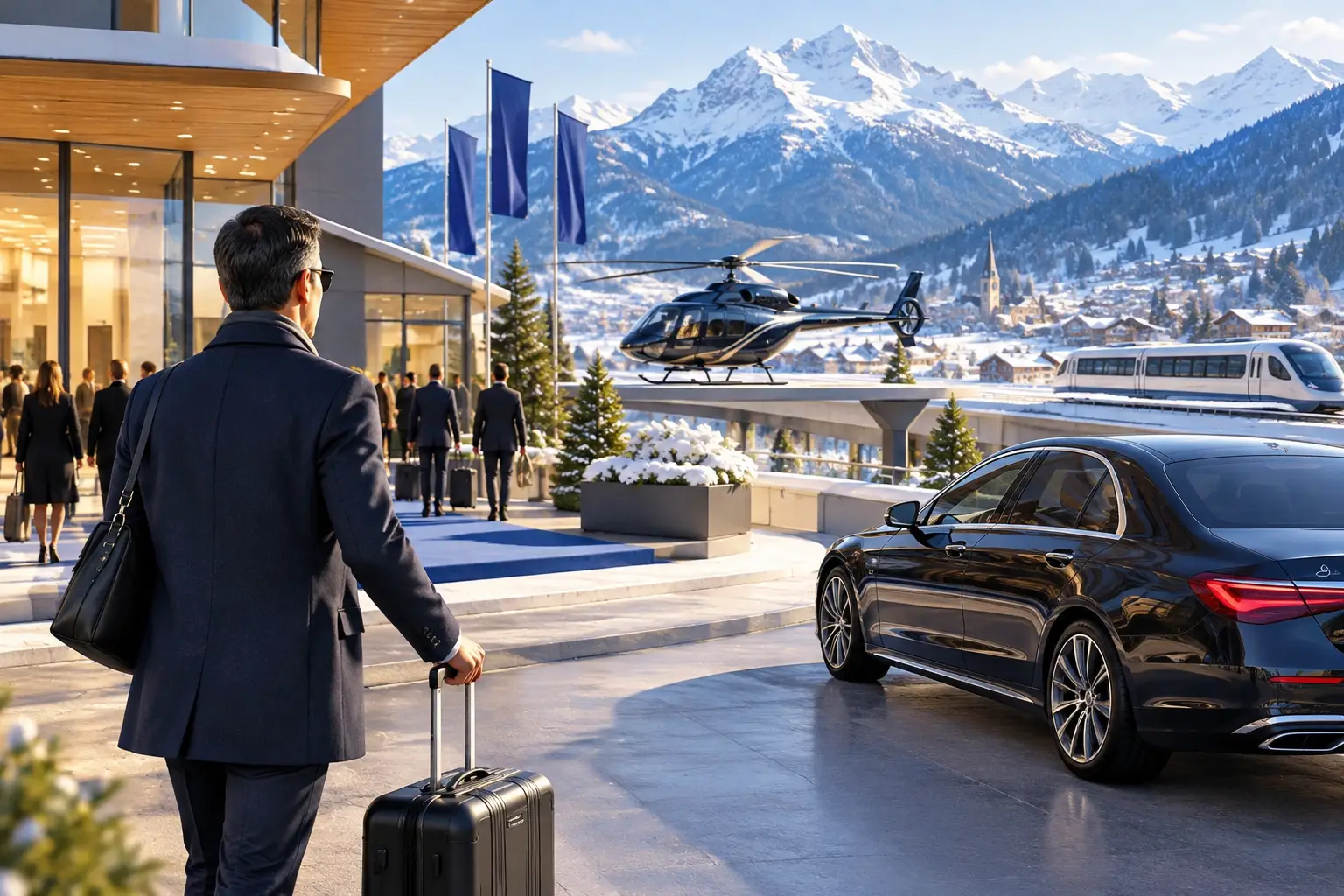
A search for “wef davos mobility planing” usually begins with a simple need: getting a principal, delegation, or guest from one appointment to the next without losing time, privacy, or control. During the World Economic Forum, that need becomes a highly coordinated operational task. Davos is compact on a map, yet movement during summit days is shaped by access controls, road restrictions, weather, security procedures, and schedules that can change with little notice.
For executives and event organizers, mobility is not merely transportation between hotel and venue. It is a managed part of the program. The right chauffeur operation protects the schedule, supports a composed arrival, and gives the passenger a quiet, dependable space between demanding commitments.
What WEF Davos Mobility Planning Really Requires
A successful mobility plan starts well before the first vehicle arrives. It connects the guest itinerary, accommodation details, meeting locations, vehicle requirements, security expectations, and contact hierarchy into one workable operating schedule. This is especially relevant for international visitors who may arrive through Zurich, Geneva, or a private aviation terminal before continuing to Davos.
The key challenge is that a route plan alone is never enough. A departure that appears straightforward can be affected by a checkpoint, a temporary traffic hold, snowfall, a delayed meeting, or a changed access instruction. Professional planning therefore includes realistic timing buffers and clear alternatives without making the passenger feel that the day is overplanned.
For a principal, the result should feel uncomplicated. The chauffeur is ready at the agreed pickup point, the vehicle is prepared, luggage is handled discreetly, and the next movement is already understood. Behind that calm experience sits continuous communication and precise coordination.
Build the Plan Around the Itinerary, Not the Vehicle
The most reliable approach is to begin with the passenger’s full program. Arrival and departure details matter, but so do hotel check-in times, hosted dinners, media commitments, private meetings, and any movement involving several guests. A vehicle may be required for a single executive, a couple, a small delegation, or a rotating group with different schedules.
Allow time for the moments between meetings
At WEF, the interval between appointments can be as valuable as the meeting itself. An executive may need ten quiet minutes to prepare for a panel, join a confidential call, or review briefing notes. A well-planned chauffeur service treats these intervals as part of the assignment, not as idle time.
This affects how vehicles are positioned. In some situations, remaining nearby is the right choice because the schedule is compressed or unpredictable. In others, a coordinated standby plan provides better flexibility. The correct model depends on the passenger’s agenda, access conditions, and the degree to which meetings are likely to overrun.
Define one decision-maker for changes
Last-minute changes are normal during a major international forum. What creates avoidable friction is not the change itself, but unclear authority. Before service begins, it helps to designate one primary contact and one backup who can approve amendments to pickup times, destinations, or passenger lists.
The chauffeur should receive verified instructions through a defined channel rather than relying on several parallel messages. This protects discretion and prevents a vehicle from being redirected based on incomplete information. For corporate travel managers, this structure also makes it easier to maintain a clear record of the day’s movements.
Match the vehicle to the assignment
Executive mobility calls for more than a premium vehicle. Passenger count, luggage, winter conditions, personal preferences, and the desired arrival profile all influence the right choice. A business sedan may suit a single executive moving between meetings, while a luxury van can be more appropriate for a small team, equipment, or a coordinated airport arrival.
The trade-off is practical: a larger vehicle offers capacity and flexibility, while a more compact executive vehicle may be easier to position for individual appointments. The best choice supports the actual itinerary instead of selecting a vehicle based only on appearance.
Managing Arrivals From Zurich, Geneva, and Beyond
For many guests, the mobility experience starts long before Davos. Flight arrivals can shift, baggage collection may take longer than expected, and international passengers often need a smooth transition from aviation logistics to ground transport. This is where flight monitoring, clear meeting instructions, and a chauffeur who understands the itinerary become essential.
A transfer from Zurich or Geneva should be planned with sufficient margin for road and weather conditions, particularly during winter. It is unwise to treat a published driving time as a fixed promise during a week when traffic patterns may change quickly. A professional provider will recommend a schedule that protects important commitments rather than relying on the narrowest possible transfer window.
For private aviation guests, the plan should reflect the handling process, crew coordination, luggage requirements, and preferred level of visibility. Some passengers want a direct, efficient handover. Others require a more discreet approach with minimal waiting and limited exposure. These preferences should be confirmed in advance, not discussed at the curbside.
Security, Discretion, and Access Coordination
WEF travel frequently involves sensitive roles, confidential discussions, and high-profile attendees. Discretion is therefore operational, not decorative. It means chauffeurs maintain professional distance, passenger information is handled carefully, and itinerary details are shared only with those who need them to execute the service.
Access rules and security procedures may affect where a vehicle can wait, how close it can approach a venue, and when a passenger must continue on foot. These conditions should be anticipated in the itinerary. A chauffeur can help ensure that the passenger arrives at the most practical authorized point, with enough time to complete any required security process calmly.
Security planning also benefits from clarity about personal preferences. If a client travels with security personnel, assistants, or additional guests, the ground transportation plan should account for each role. Coordination does not mean interfering with the security detail. It means ensuring the chauffeur service complements the wider protection and event plan.
Why Local Winter Readiness Matters
Davos in January requires a winter-capable mindset. Conditions can move from clear roads to snow, ice, and reduced visibility within a short period. Vehicles need to be properly equipped, maintained, and prepared for alpine driving. Just as important, chauffeurs need the experience to drive smoothly and confidently when conditions are demanding.
Passengers should not feel the operational pressure of winter travel. They should enter a clean, warm vehicle, settle in comfortably, and arrive with their schedule intact wherever conditions allow. That outcome comes from preparation, conservative timing, and drivers who understand that safety takes priority over unrealistic promises.
A Chauffeur Is Part of the Guest Experience
At an event where first impressions carry weight, the chauffeur is often the first personal representative a guest encounters after arrival. Professional presentation, multilingual communication, calm conduct, and situational awareness matter. The chauffeur may need to assist with luggage, recognize a changing pickup point, or remain unobtrusive while an executive takes a call.
This is also why continuity is valuable. When possible, assigning the same chauffeur to a principal across multiple movements creates familiarity without unnecessary conversation. The chauffeur learns the preferred pace, understands the day’s rhythm, and can anticipate routine needs. For delegations and hosts, that consistency reduces the coordination burden.
Berner Limousine supports demanding WEF-related movements with premium vehicles, experienced chauffeurs, and personal coordination designed for changing executive schedules. The objective is not simply to provide a ride, but to maintain a dependable mobility framework from arrival through final departure.
The Value of a Contingency Plan
No WEF itinerary should depend on one perfect sequence of events. A practical mobility plan includes alternatives for delayed arrivals, extended meetings, a changed hotel, an additional passenger, or a route that becomes temporarily impractical. The contingency does not need to be visible to the traveler, but it should exist.
This is where direct human coordination remains valuable. Automated confirmations can document a booking, yet they cannot independently judge whether a delayed flight affects a dinner reservation, whether an assistant’s update changes the vehicle requirement, or whether a principal needs a different pickup approach after a schedule revision.
For corporate teams, providing the chauffeur service with a daily run sheet, relevant contact numbers, and known priority movements creates a strong foundation. For private guests, a concise itinerary and preferred communication method are often enough. In both cases, the aim is the same: fewer questions at the moment of travel and more confidence throughout the day.
The most effective WEF mobility plan is the one the passenger barely notices. It leaves room for changing priorities, preserves privacy, and turns every transfer into reliable time for preparation, conversation, or quiet reflection before the next important room.